


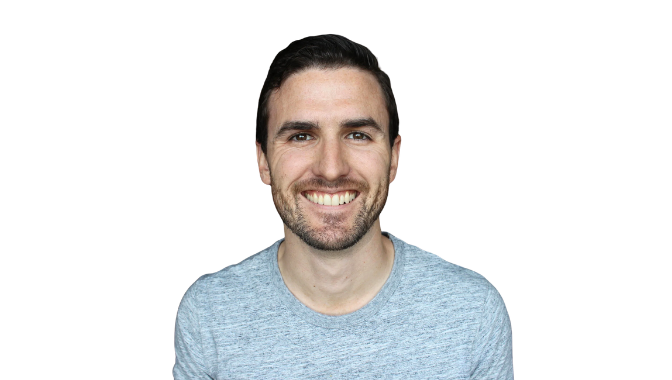

Jay Shetty & Rob Dial ON How to Achieve Your Goals This Year
In this On Purpose episode, Jay Shetty's guest is Rob Dial, a leading mindset coach and the host of The Mindset Mentor podcast. Rob Dial has dedicated his career to helping millions of people rewire their cognitive patterns and habitual behaviors, moving them from being stuck to a life of intentionality. He shared actionable steps for creating a roadmap to success, touching on how neuroscience, discipline, and purpose interconnect.
Have you ever felt like your own worst enemy, trapped by habits that don't serve you?
In this On Purpose episode, Jay Shetty's guest is Rob Dial, a leading mindset coach and the host of The Mindset Mentor podcast. Rob Dial has dedicated his career to helping millions of people rewire their cognitive patterns and habitual behaviors, moving them from being stuck to a life of intentionality. He shared actionable steps for creating a roadmap to success, touching on how neuroscience, discipline, and purpose interconnect.
Discipline as the Ultimate Form of Self-Love
Rob Dial told Jay Shetty that people tend to view discipline through a negative lens; it's often associated with punishment and rigid control. Yet, in reality, it's the greatest form of self-love, he added. Dial explained that it's easy to engage in harmful activities, such as sleeping in every day, skipping the gym, or eating poor-quality food. These actions require no discipline.
Conversely, when you do something that is good for your future self, such as waking up early or eating nourishing food, it requires you to be in control and disciplined. Rob Dial admitted to Jay Shetty that he didn't use to be disciplined himself – he was a former stoner and a surfer who avoided responsibility and felt miserable.
But it all changed for Dial when he was 19: he entered a sales environment where he was forced to make hundreds of cold calls every day. Although he hated it, he realized that his life would be much better if he did it anyway. So, he shifted his attention from the immediate discomfort toward the long-term benefits.
Willpower Is a Muscle
Rob Dial told Jay Shetty that willpower is more than a philosophy, but it's rooted in the brain. Neuroscience has identified a specific part of the brain called the anterior mid-cingulate cortex (aMCC), which appears to be the seat of discipline and willpower. This area functions like a muscle.
Rob Dial explained to Jay Shetty that professional athletes often have a larger-than-average aMCC because they have grown it through repeated exertion and doing things they did not want to do. Moreover, a 2019 study showed that people struggling with extreme obesity or low willpower often have a smaller aMCC.1 Yet Rob Dial assured the audience that this can increase when we become more disciplined.
When people with a smaller aMCC begin to engage in activities they find difficult but beneficial, this part of their brain physically increases in volume. According to Rob Dial, the best way to get ahead of the people who remain distracted by their phones is to do the exact opposite. When you consistently choose the hard thing over momentarily indulgences, you rewire your brain for success.
Minimizing Initial Friction
The most difficult part of changing your habits is overcoming the initial resistance when starting a new task. Dial told Jay Shetty that shrinking the start can help your brain overcome this hurdle. Our brains are biologically programmed to resist change, and if it takes longer than 15 seconds to start, we are likely to abandon it.
The trick is to make the first step as frictionless as possible: if you want to run in the morning, place your running clothes next to the sink where you brush your teeth, or even sleep in them. If your intention is to wake up early, Dial suggests using a coffee maker with an automatic timer so the coffee is ready when you walk into the kitchen. The goal is to reduce the mental energy required to initiate a task. Jay Shetty agreed that forcing yourself to do something you hate drains immense physical and mental energy.
Health and Purpose Go Hand in Hand
When Rob Dial worked jobs he hated, he felt exhausted and unfulfilled. He told Jay Shetty that having a purpose is a renewable energy source, but when you do something out of alignment with your purpose, you have to compensate for the lack of motivation, which eventually leads to burnout. But when your actions and your true calling align, it feels like the universe is providing you with the energy.
Taking care of your health is equally important; Jay Shetty shared a moment when he had to invest more heavily in his health. While he was disciplined in meditation, he didn't show the same willpower when it came to his physical wellness and diet. After paying closer attention to his body, he found he could perform at a higher level and that good health is essential to a person's well-being.
Learn From Everything
If you haven't found your purpose yet, it's never too late. Rob Dial suggests that, instead of following the one passion you think you have, act like a hummingbird. Explore your interests and let them lead you for the next three years. He told Jay Shetty that, over a decade, these seemingly disparate interests would eventually align to reveal a greater purpose.
Dial has a background in sales, is interested in psychology, has traveled in Europe, and tried and failed to become a musician. All these unrelated paths taught him various skills that contributed to his current success. He told Jay Shetty that his sales experience taught him psychology, his music equipment gave him the tools for podcasting, and his travel inspired his desire for a location-independent career.
Purpose is often about connecting dots and collecting knowledge and experiences rather than a sudden discovery. Similar to Dial, Jay Shetty also combined his experience as a monk with his education and work experience in management consulting and media to create his current platform.
From Fear to Action
Rob Dial told Jay Shetty that people often talk themselves out of their passions out of fear. He explained that humans naturally prefer to remain in their comfort zone as a protection mechanism. If you hold yourself back from doing something for fear of being judged or failing, it's likely due to past trauma. Dial said the fears we project onto our future are often triggers from past pain we haven't yet healed.
For example, fearing social media judgment can be linked to bullying in high school or being called "stupid" by a teacher. Dial believes that our fears show us exactly where we need to work on ourselves. He recommends exposure therapy, which means putting yourself in a situation that scares you. By repeatedly doing the thing you dread, you teach your brain that you are safe and the danger is not real. Eventually, your defense mechanism will relax, and your comfort zone expands.
Service-Oriented Mindset
Jay Shetty understood that people are often forgotten after a century or two, but their work may continue to touch lives long after their death. So, he sees himself as a modern messenger of a 5000-year-old tradition, rather than as the owner of the wisdom he shares. Dial explained that removing the ego or the self from your work makes it much easier to stay consistent.
When your goal is to become famous and rich, you are more likely to burn out because you focus on the result for yourself rather than on the craft or the value you provide to others. Dial believes that long-term discipline is easier to achieve when we shift our mentality from me-centered to service-centered.
Start First, Hone Later
Moreover, becoming good at what you do requires more than just passion; it's a refusal to quit, even when times are hard. Dial told Jay Shetty that many people don't even start, and among those who do, even fewer persevere. He calls this the cockroach mentality, refusing to give up on a goal. He admitted that he wasn't the most talented or skilled person when he started, but he was willing to put in the work.
You won't become good at something without doing it. Dial explained to Jay Shetty that you must be willing to be a clumsy beginner, so you can eventually become a skilled master. He admitted that his early podcast episodes are cringeworthy to him now, but they were necessary steps. He stayed motivated by the small wins, such as an early email from a listener who shared how his podcast helped her through depression. To Dial, the direct impact on his listeners was more important than the download numbers.
Designing Your Environment for Success
When we fail at our resolutions, we often blame a lack of willpower. However, Dial shared with Jay Shetty that the most consistent people don't have more willpower, but better environments. According to him, willpower is a finite resource that should be tested constantly. He suggests limiting temptations as much as possible, such as moving your phone to another room while you work.
When your environment is designed to foster good habits, you save energy by not constantly resisting temptation, such as eating the chocolate sitting on the desk. Rob Dial and Jay Shetty agree that this model is essential for long-term consistency. Changing a habit takes 60-100 days, but changing your identity can take three to four years. Therefore, it's crucial to consistently develop good habits and gradually change your identity to align with your new lifestyle.
Building a Dopamine Reward System
Rob Dial warned the audience not to try to be the best at everything at once, because it's too much pressure. As nature operates in season, pick a priority for a season (growing, shedding, or recovering), and focus on one task at a time. To firmly lock in a habit, Dial recommends doing it for at least 100 days.
Moreover, Rob Dial suggested creating an action-based dopamine reward system to keep you motivated during those 100 days. Instead of chasing the big end goal, he recommends setting daily, action-based goals that take only a few minutes to complete. When you complete it, celebrate yourself; the release of dopamine will tell your brain that the action was rewarding, making you want to repeat it the next day.
Rob Dial told Jay Shetty that we can all reclaim control by changing our lens: instead of hoping we'll have a good year, take intentional, disciplined action. He stressed that the first step toward making the life you want your reality is to believe you have already received it.
More From Jay Shetty
Listen to the entire On Purpose with Jay Shetty podcast episode “Rob Dial: Want to Actually Achieve Your Goals in 2026? Use THIS Action-Based Goal System to Get Back on Track (Even If You Fall Off!)” now in the iTunes store or on Spotify. For more inspirational stories and messages like this, check out Jay’s website at jayshetty.me.
Disclaimer: This episode reflects Rob Dial’s personal experiences and perspectives. It is not medical, psychological, or therapeutic advice. Any references to health, diet, or lifestyle practices are his individual choices and may not be suitable for everyone. Results and experiences vary. Always consult a qualified professional before making changes to your health, wellness, or personal care routines.
1Touroutoglou A, Andreano J, Dickerson BC, Barrett LF. The tenacious brain: How the anterior mid-cingulate contributes to achieving goals. Cortex. 2020 Feb;123:12-29. Doi: 10.1016/j.cortex.2019.09.011. Epub 2019 Oct 9. PMID: 31733343; PMCID: PMC7381101.
Sign up for the only email that puts purpose at the center of your day.


Looking for greater meaning? This quiz shows you how to live with purpose every day.
Take the Quiz
Dreaming of becoming a life coach? This quiz tells you if a coaching career is right for you.
Take the QuizDreaming of becoming a life coach? This quiz tells you if a coaching career is right for you.
Take the Quiz
Everyone communicates differently. Discover your own personal fight style now.
Take the Quiz
Understanding your role in a relationship is the first step to making things work.
Take the Quiz

