


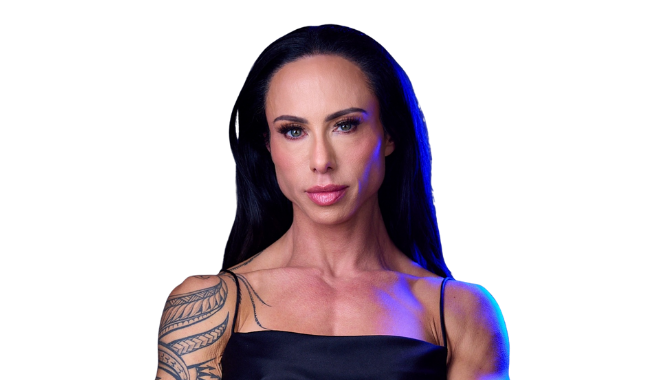

Jay Shetty & Dr. Gabrielle Lyon ON Building Muscle for Better Aging
In this On Purpose episode, Jay Shetty sat down with Dr. Gabrielle Lyon, a physician, founder of the Institute for Muscle-Centric Medicine, and the author of Forever Strong and The Forever Strong Playbook. Her work focuses on the revolutionary idea that muscle is the key to longevity, vitality, and the prevention of chronic disease.
What if the secret to living a long, disease-free life isn't about what you lose, but what you gain?
In this On Purpose episode, Jay Shetty sat down with Dr. Gabrielle Lyon, a physician, founder of the Institute for Muscle-Centric Medicine, and the author of Forever Strong and The Forever Strong Playbook. Her work focuses on the revolutionary idea that muscle is the key to longevity, vitality, and the prevention of chronic disease. In this interview, she explained how shifting our focus from weight loss to muscle gain can fundamentally transform our metabolic health and mental resilience.
The Mind and Body Are a Two-Way Street
Dr. Lyon told Jay Shetty that building muscle starts in the mind because there is a bi-directional relationship between our muscles and our thoughts. People struggle to build muscle because they often don't feel worthy of being healthy or believe they are too old or too busy to start. However, in her opinion, these thoughts are brain-generated distractions irrelevant to our goals.
The excuses we come up with can feel incredibly real and powerful, and hinder any fitness progress. Dr. Lyon agrees with Jay Shetty that motivation is important, but even in its absence, one must remain committed. Another way to look at fitting fitness into your schedule is that, if you don't prioritize it now, you'll have to make time for sickness later. Dr. Lyon added that, while the mind can move the muscle, the muscle can also move and stabilize the mind in return.
Gaining Muscles over Losing Weight
Dr. Gabrielle Lyon told Jay Shetty that people need to stop chasing obesity and start focusing on building skeletal muscles. In the last half of the century, people have been obsessed with weight loss, yet the obesity epidemic worsened at the same time.1 She believes that striving only to lose weight may feel disempowering, because the average person doesn't understand body composition when starting a diet. She explained that our bodies consist of roughly 40% muscle, and this is why we must focus on gaining mass rather than losing weight.
Dr. Lyon explained to Jay Shetty that the muscle system is the only organ system over which we have voluntary control, so it's extremely important to focus on keeping it healthy. In her view, diseases attributed to obesity, such as diabetes, cardiovascular disease, or Alzheimer's, may actually be pathologies of unhealthy muscle.2 Instead of thinking about aesthetics, Dr. Lyon encourages the audience to focus on functional, medical metrics and start seeing muscle as the organ of longevity.
Muscle as a Suitcase
Dr. Gabrielle Lyon told Jay Shetty that skeletal muscle serves as the body's primary metabolic control center and the primary site of carbohydrate and fatty acid metabolism. She suggests imagining they act like a suitcase that stores glucose when we eat.
If you try to pack too much into the suitcase, it won't open; conversely, if we overconsume carbs while being sedentary, muscles underdevelop, and there won't be anywhere for the energy to go. When the "muscle suitcase" is too full or too small, excess glucose and fatty acids remain in the bloodstream, eventually disturbing metabolism and leading to the storage of body fat.
Dr. Lyon added that muscle also serves as the body's amino acid reserve, acting as an armor. When people become acutely ill with conditions such as the flu or pneumonia, the body draws on this muscle reserve to repair and rebuild tissues. So, greater muscle mass provides a stronger buffer against metabolic disease and stronger defense during physical stress.
The Anatomy of Skeletal Muscle
Our body is made up of cardiac muscle in the heart, smooth muscle in organs (such as the uterus and blood vessels), and skeletal muscle, which is the powerhouse for mobility and strength. Dr. Lyon explained to Jay Shety that when we contract skeletal muscle, it releases myokines, hormone-like chemicals that travel throughout the body to positively affect the brain, liver, and bones.
Healthy muscles should be lean and red, like a filet mignon. However, in sedentary people, it will look more like a fat-marbled wagyu steak. Dr. Lyon told Jay Shetty that, when fat infiltrates the muscle fibers, it causes a condition known as intramuscular adipose tissue (IMAT). No sedentary person is healthy, she added, because their muscles are unhealthy. So, we must prioritize muscle health over simply losing body fat, because it is the root cause of the modern metabolic crisis.
How to Build Body Armor
If you want to start building body armor, you must be intentional about it. Dr. Lyon warns that it becomes more challenging as we get older. She told Jay Shetty that children are naturally in an anabolic state (building muscle), while adults after 35 must pay more attention and be more purposeful with their training and nutrition.
If the thought of going to the gym feels daunting, Dr. Gabrielle Lyon reminded the audience that they already lift weights on a regular basis, in the form of groceries, luggage, and even toddlers. The current recommendation for health is 150 minutes of moderate activity per week with two days of resistance training.3 However, Dr. Lyon told Jay Shetty that 74% of people fail to meet these recommendations.
To make it easier to start, Dr. Lyon suggests beginning with two to three days per week of resistance training, which can include bodyweight, bands, or traditional weights. It's all about providing enough stimulus to the tissue to help it grow. She recommends between 10 and 12 reps, pushing until you almost reach the point of breaking. This ongoing resistance forced the body to adapt and grow stronger, much like the mind reacts to mental challenges.
Protein Is a Must
Diet is paramount for a healthy life, especially when you are trying to build muscle. Dr. Lyon told Jay Shetty that dietary protein is a biological necessity, not optional. Protein is highly satiating and triggers gut hormones that signal to the brain that the body has received sufficient caloric load. As we age, we must stimulate protein synthesis, so Dr. Lyon recommends consuming 33-44 grams of protein at the first meal of the day.
Dr. Gabrielle Lyon clarified for Jay Shetty that protein is not a single substance; it consists of 20 amino acids, 9 of which are essential and must be obtained from food. For muscle health, the key amino acid is leucine, and muscle protein synthesis is triggered when leucine levels reach about 2.5 grams.
Our bodies are designed to turn over 250 grams of protein daily, which means they essentially replace themselves about four times a year. However, we become less efficient at this process as we age. Therefore, Dr. Lyon explained to Jay Shetty that we must protect the muscles by adopting a high-protein diet, close to one gram per pound of target body weight.
Limit Carb Intake
Carbohydrates are another source of energy, Dr. Lyon explained. She shared with Jay Shetty a statistic showing that the average person consumes 98% more refined grains and processed carbohydrates than recommended.4 If you add sedentarism to a poor diet, the health consequences become more dire.
If you have a sedentary lifestyle, Dr. Lyon asserted that consuming more than 50 grams of carbs at once can disrupt metabolism because the energy has nowhere to go. Instead, she recommends limiting the carbohydrate intake to 130 grams per day, with exceptions for people who are physically active.
Dr. Lyon explained to Jay Shetty that carbs and fats can sometimes serve as interchangeable energy sources, depending on personal preference. However, protein must remain the fixed foundation of the diet to ensure proper muscle care and avoid the ebbs and flows of blood sugar that lead to cravings and overeating.
Skinny Yet Still Obese
Weighing less doesn't necessarily equal a healthy body. Dr. Lyon introduced Jay Shetty to the term "skinny fat," which she identifies as sarcopenic obesity: it occurs when you have low muscle mass and function (sarcopenia) and high body fat. She warns against weight-loss pills because they reduce your overall mass, including muscle mass.
When you lose muscle rapidly, you become a smaller version of yourself but with a compromised metabolism. Dr. Gabrielle Lyon explained to Jay Shetty that low muscle mass is a direct indicator of lower bone density, as muscle helps keep bones strong. Being skinny fat increases the risk of higher glucose, triglycerides, and insulin, which are the core drivers of Alzheimer's and cardiovascular disease.
Movement Strategies
To assess your current strength and growth, Dr. Lyon told Jay Shetty that people should test their current push-up baseline and how much they can increase it with training. Other forms of exercise she recommends are walking and resistance training.
Dr. Lyon told Jay Shetty that walking is excellent for Type 1 muscle fibers (endurance), but it doesn't increase Type 2 fibers (power). For the latter, High-Intensity Interval Training (HIIT) is effective not only in building Type 2 fibers, but also for improving insulin sensitivity, and it even aids fertility and sexual function. To complete the training, she recommends including both resistance training for mass and strength and cardiovascular activity for mitochondrial health.
Supplements and Fake Promises
Dr. Lyon told Jay Shetty that one of the most-studied and safest supplements for muscle growth is creatine, with a recommended dosage of 3-5 grams for muscle health and 10-12 grams for brain health.5 Additionally, she recommends Vitamin D, which is vital, especially for older people, because it can help prevent falls. Omega-3 fatty acids, magnesium, and Urolithin A (postbiotic) are also on her list of recommendations.
When deciding what to add to your diet, Dr. Lyon warns against highly processed, protein-rich foods marketed as such. She told Hay Shetty that marketing can be deceptive and urged the audience to remain discerning and focus on the foundational scientific principles of whole foods and resistance training.
More From Jay Shetty
Listen to the entire On Purpose with Jay Shetty podcast episode “Dr. Gabrielle Lyon: #1 Blueprint for Building Muscle That Will Change How You Age! (This Will Transform Your Long-Term Health!)” now in the iTunes store or on Spotify. For more inspirational stories and messages like this, check out Jay’s website at jayshetty.me.
Disclaimer: The practices described are based on personal experiences and preliminary research. They are not medical advice, nor are results guaranteed. Individual outcomes vary, and some claims are still being studied. Always consult a qualified healthcare professional before beginning any new health, wellness, or therapeutic practice.
1Mozaffarian D. Perspective: Obesity-an unexplained epidemic. Am J Clin Nutr. 2022 Jun 7;115(6):1445-1450. doi: 10.1093/ajcn/nqac075. PMID: 35460220; PMCID: PMC9170462.
2Collins KH, Herzog W, MacDonald GZ, Reimer RA, Rios JL, Smith IC, Zernicke RF and Hart DA (2018) Obesity, Metabolic Syndrome, and Musculoskeletal Disease: Common Inflammatory Pathways Suggest a Central Role for Loss of Muscle Integrity. Front. Physiol. 9:112. doi: 10.3389/fphys.2018.00112
3Centers for Disease Control and Prevention (CDC). “Adult Activity: An Overview.” Physical Activity Basics. Updated April 17, 2025. https://www.cdc.gov/physical-activity-basics/guidelines/adults.html
4U.S. Department of Agriculture and U.S. Department of Health and Human Services, 2025 Dietary Guidelines Advisory Committee Full Panel Memorandum: Grains and Staple Carbohydrate Foods, https://www.dietaryguidelines.gov/sites/default/files/2024-10/2025_DGAC_FPM_Q2_Protocol_Grains-StapleCarbohydrateFoods_v4_508c.pdf.
5Hall M, Trojian TH. Creatine supplementation. Curr Sports Med Rep. 2013 Jul-Aug;12(4):240-4. doi: 10.1249/JSR.0b013e31829cdff2. PMID: 23851411.
Sign up for the only email that puts purpose at the center of your day.


Looking for greater meaning? This quiz shows you how to live with purpose every day.
Take the Quiz
Dreaming of becoming a life coach? This quiz tells you if a coaching career is right for you.
Take the QuizDreaming of becoming a life coach? This quiz tells you if a coaching career is right for you.
Take the Quiz
Everyone communicates differently. Discover your own personal fight style now.
Take the Quiz
Understanding your role in a relationship is the first step to making things work.
Take the Quiz

