
Jay Shetty & Alex Honnold ON Managing Your Relationship with Fear
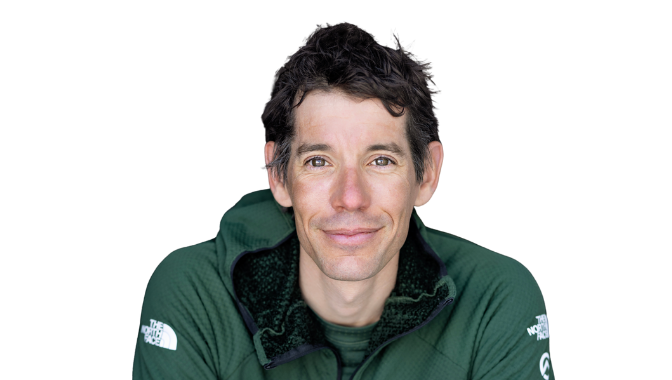
In this On Purpose episode, Jay Shetty sat down with climber Alex Honnold. Honnold is one of the greatest climbers in history, who free soloed the El Capitan peak in California. He opened up about his adventurous nature, his family life, and being a husband and father.
What hides behind someone's drive for adrenaline and their calculated mind, to be hanging from the edge of the world's tallest structures without a safety harness?
In this On Purpose episode, Jay Shetty sat down with climber Alex Honnold. Honnold is one of the greatest climbers in history, who free soloed the El Capitan peak in California. He opened up about his adventurous nature, his family life, and being a husband and father. Additionally, Honnold is a philanthropist whose foundation brings solar energy to communities in need.
Why Taipei 101
Alex Honnold discussed his plans to climb Taipei 101 in Taiwan with Jay Shetty, which is one of his most difficult targets so far. He explained that, to him, free climbing it would be awesome and fun. It was difficult to receive permission to climb such a massive structure, but he wouldn't let such an opportunity pass.
Honnold had scouted the building 12 years ago, as part of a TV project that got canceled. So he had known since 2013 that the ascent was possible. He told Jay Shetty that he usually chooses an objective based on its aesthetic beauty and physical feasibility. In his opinion, Taipei 101 is a singular and striking building that stands out in the cityscape, catching the eye.
When he picks his next target, Honnold admits it has to be a sweet spot where it is exciting enough but not so dangerous that it can't be performed on live TV. During the ascent, he is completely focused and confident in his abilities. His entire professional career is built on his goal of executing difficult tasks with total precision.
From the Climbing Gym to the Highest Peaks
Alex Honnold started climbing at 10 in Sacramento, California. At that time, sport was considered a niche, not a mainstream activity. He told Jay Shetty that his parents were supportive of his interests, but becoming a professional climber was not a traditional career path back then. So, Honnold kept going to the climbing gym for the next eight years, until he got his driver's license. From that moment on, he could drive himself anywhere and started exploring outdoor experiences, including extreme rock climbing.
For years, Honnold imagined himself as a mountain guide or a low-level worker in the climbing world. He wouldn't see himself as a professional athlete for a long time. Even after he started receiving sponsorships, he was still living in a van and saw himself more as a homeless person who received free shoes than as a professional. He told Jay Shetty that living as a regular person allowed him to focus entirely on the movement of climbing, which is the core joy that keeps him coming back to the sport.
What Makes a Good Climber
Climbing is a full-body discipline, Honnold told Jay Shetty; while people often notice arm strength, the legs should drive most of the movement, much like climbing a very steep staircase. Moreover, the hands should ideally function like a handrail for balance rather than the primary upward force.
While Alex Honnold is celebrated as a great climber, he admitted to Jay Shetty that his finger strength is his greatest weakness. This is one of the most critical metrics for elite climbers, he explained; compared to his professional peers, he is likely one of the weakest in this category. But he compensated for this shortcoming with his superior technique and body positioning, using his hips and weight distribution to keep the strain off his fingers. He focuses on efficiency and the mechanics of movement instead of relying solely on brute force.
Can We Unlearn Fear?
In 2016, Alex Honnold had a brain scan that showed his amygdala didn't respond in the same way as regular people when faced with fear-inducing stimuli; instead of getting activated, it remained almost inactive. Jay Shetty noted that long-term meditators achieve the same results. However, Honnold explained that he isn't biologically fearless, but he believes this response is the result of thirty years of consistent exposure to scary situations.
The test consisted of Honnold lying in a tube, looking at black-and-white photos; to him, this was far from scary compared to his real-life experiences. He told Jay Shetty that it's not frightening if your entire life is built around exposing yourself to dangerous and fear-inducing situations. He is convinced that practice can render you better at anything, including fear management.
To Honnolod, climbing has always had an edge, because the consequences are real. However, being in constant proximity to danger has shaped his relationship with fear, and he now perceives it as a manageable situation rather than an overwhelming emotion.
Filtering Out Fear
Alex Honnold compared fear to hunger; according to him, most people find it overwhelming because it's such an infrequent sensation, whereas they feel hungry regularly. Honnold explained that, just as someone can decide to address hunger in due time, he can identify fear early on (such as feeling butterflies, tingling, or heightened alertness) and treat these sensations as neutral data points.
Jay Shetty pointed out the similarities between Honnold's approach and that of a monk. He explained that long-form meditations help individuals regulate discomfort in a very similar fashion. Jay used to participate in meditations lasting up to 24 hours, which required him to disconnect from his body and move past physical pain and mental distractions.
However, Honnold is not a meditator, but he agrees with Jay Shetty that people must practice the skill of sitting with their discomfort. For him, it's less about completely eliminating fear and more about deciding whether the fear is founded and if he should act on it or ignore it.
Weighing Risks Before an Ascent
While Alex Honnold may have an extreme image to the wider public, he is pragmatic about his limits. He told Jay Shetty that he didn't go through with many projects when he realized that the rock quality was poor or that he had misjudged the dangers. He highlighted that free soloing is an activity in which you must stay well within your limits because there is no room for error, and any misstep can be fatal. On the other hand, rope climbers push themselves to the point of falling in order to grow.
When Honnold scouted Taipei 101, he learned how to choose the right kind of challenge. He had previously scouted the Burj Khalifa, the world's tallest building, but found it to be cutting-edge and slippery; he even considered using a parachute as a safety measure, but eventually decided against it because the risks were too extreme. Yet Taipei 101 has secure climbing features that felt meaningful, without being unnecessarily precarious, Honnold said. For him, it's about being intentional with the risks you take.
Rehearsing the Worst-Case Scenario
What helps Alex Honnold prepare for his climbs is a visualization technique that differs from the mainstream interpretation. Instead of seeing himself on the top of the building and celebrating, he spends his time imagining the key details of the ascent. He told Jay Shetty that he focuses on the mechanics of the moves, the rock texture, and how a potential slip may feel. He admitted that he even visualizes the consequences of his actions, sometimes even imagining falling to his death in horrible ways.
Honnold doesn't have to think about these terrifying possibilities while he is on the wall because he has already processed all of them in a safe environment. He explained to Jay Shetty that this mental rehearsal allows him to choose to focus on execution and leave fear aside. He described his mental process as daydreaming about the things that matter: instead of using his imagination to worry about the future, Honnold utilizes it as a preparation tool, transforming worst-case scenarios into something that he can manage and process.
The Lifestyle of a High Performer
Alex Honnold discussed his daily routine with Jay Shetty, which includes a vegetarian diet and enough sleep. He used to be a perfectionist who learned to shift his focus only to the things that matter most to him. In other areas of life that present less interest, he admits to putting in low effort, sometimes even only doing the bare minimum.
When he shifted his focus to the essentials, Honnold maintained a sense of normalcy even as he prepared for top-tier challenges. His goal was to make the extreme feel natural, so that he doesn't need to change his mindset on the day of the climb, from calm and "normal" to "crazy."
Honnold explained that his diet serves as a performance enhancer – he avoids sugar and dairy products, and, once he gets over the initial craving, he simply feels better. He doesn't do anything unusual the night before a big climb, and tries to keep the rituals deliberately mundane: he eats a good meal, gets a rest day, and goes to bed early, to keep pressure from building up.
Honnold also shared his strategy with Jay Shetty for keeping high-stakes objectives from becoming mentally overwhelming. He explained that he stacks goals, a strategy he implemented during the filming of Free Solo. He viewed climbing El Capitan as practice for other climbs in Alaska or Atlantica. This way, he avoided giving it overwhelming significance, treating it as a regular climb rather than a big deal in the moment. This approach allowed him to remain calm and easygoing throughout the process.
The Human Side
Beyond personal achievement, Alex Honnold is deeply committed to environmental and social causes. He started the Honnold Foundation because he didn't need the excess money he made from his notoriety. Rather than accumulating wealth for luxuries, such as a yacht, he decided to channel his resources into something more impactful. The Honnold Foundation is dedicated to supporting community solar projects, which aim to provide accessible and sustainable energy solutions for underserved communities.
Additionally, Honnold's podcast Planet Visionaries features guests such as conservationists and biologists. He admitted to Jay Shetty that his guests' work to protect the planet inspired him, and the conversations leave him feeling recharged and hopeful about the challenges our modern world is currently facing. He deeply values honesty, generosity, and the simple joys of life, such as shared conversations with his wife in the evening, as connection is a vital ingredient to a fulfilled life.
More From Jay Shetty
Listen to the entire On Purpose with Jay Shetty podcast episode “ALEX HONNOLD: ONE Interview Before Free-Soloing Taiwan’s Tallest Building LIVE (This Episode Will Change Your Relationship with FEAR)” now in the iTunes store or on Spotify. For more inspirational stories and messages like this, check out Jay’s website at jayshetty.me.
Disclaimer: This episode reflects Alex Honnold’s personal experiences and perspectives. It is not medical, psychological, or therapeutic advice. Any references to health, diet, or lifestyle practices are his individual choices and may not be suitable for everyone. Results and experiences vary. Always consult a qualified professional before making changes to your health, wellness, or personal care routines.
Sign up for the only email that puts purpose at the center of your day.


Looking for greater meaning? This quiz shows you how to live with purpose every day.
Take the Quiz
Dreaming of becoming a life coach? This quiz tells you if a coaching career is right for you.
Take the QuizDreaming of becoming a life coach? This quiz tells you if a coaching career is right for you.
Take the Quiz
Everyone communicates differently. Discover your own personal fight style now.
Take the Quiz
Understanding your role in a relationship is the first step to making things work.
Take the Quiz