


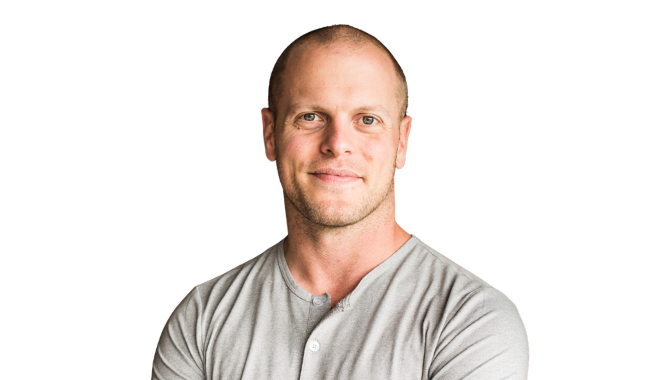

Jay Shetty & Tim Ferriss ON How to Stop Overthinking and Take Action
In this On Purpose episode, Jay Shetty sat down with Tim Ferriss, best-selling author of The 4-Hour Workweek and the host of The Tim Ferriss Show, which has surpassed a billion downloads. Ferriss has spent decades acting as a human guinea pig, blending intense scientific curiosity with practical experimentation, seeking to find the minimum effective dose for everything from physical fat loss to cognitive enhancement and emotional resilience.
“Are you hunting antelope or just chasing field mice to stay alive?”
In this On Purpose episode, Jay Shetty sat down with Tim Ferriss, best-selling author of The 4-Hour Workweek and the host of The Tim Ferriss Show, which has surpassed a billion downloads. Ferriss has spent decades acting as a human guinea pig, blending intense scientific curiosity with practical experimentation, seeking to find the minimum effective dose for everything from physical fat loss to cognitive enhancement and emotional resilience.
Bioelectric Medicine vs. Traditional Medication
Tim Ferriss explained to Jay Shetty that one of the most radical shifts in modern health is the move from pills to electricity. He argues that traditional pharmaceuticals often have undesirable side effects or act in unintended ways. However, the field of bioelectric medicine offers a more precise way to intervene in the body’s systems.
Transcranial Magnetic Stimulation (TMS) is a technology that uses magnetic fields to either excite or inhibit specific brain activity. Ferriss explained to Jay Shetty that the SAINT protocol, an accelerated form of TMS developed at Stanford, compresses months of treatment into a single week of intensive stimulation.
Personally, Tim Ferriss struggled with a severe form of OCD and anxiety. To regain his health, he used a low-dose antibiotic, D-cycloserine, to enhance neuroplasticity before undergoing a single day of hourly stimulations. He shared with Jay Shetty that the results were staggering, with him going from anxiety ranging from 8-10/10 to 0-1/10. Ferriss advocates a targeted electrical intervention rather than blocking receptors with broad-spectrum drugs.
From Ketones to Lactate
Tim Ferriss told Jay Shetty that the brain is a muscle that needs specific energy sources to function optimally. Many neurodegenerative diseases, such as Alzheimer’s, are increasingly viewed as Type 3 diabetes, where the brain becomes unable to effectively utilize glucose.1 In these cases, ketones serve as a critical alternate fuel source for the brain, with the potential to improve speech rate and cognitive abilities in Alzheimer’s patients already within 20-30 minutes.
Besides ketones, Ferriss explained to Jay Shetty the importance of lactate, a substance often dismissed as a mere waste product of exercise. However, lactate is a powerful signaling molecule that the brain can use for both fuel and as a messenger to trigger structural changes. By engaging in specific types of high-intensity training, people can flood their blood with lactate, which may lead to volumetric changes in brain structures like the hippocampus, an area often decimated by Alzheimer’s.2 So, there is the hypothesis that fuel problems are often at the root of what we perceive as problem-solving issues.
To harness the power of lactate, Ferriss points toward a specific protocol known as the Norwegian 4x4; this method involves four minutes of very hard cardiovascular work during which the heart rate reaches 85-90% of its maximum, followed by three to four minutes of active recovery. Ferriss explained to Jay Shetty that repeating this for four rounds, three times a week, has shown cognitive benefits that can last for up to five years.3 Intensity is key, as standard steady-state aerobics or walking do not produce the same concentration of lactic acid required for these brain-boosting effects.
Bridging Ancient Wisdom and Modern Neurobiology
Modern science has long separated itself from traditional healing practices; however, it’s becoming increasingly common for it to validate these methods. Ferriss brought up the vagus nerve, which he describes as two transatlantic cables running down either side of the neck, each with nearly 100,000 fibers. He told Jay Shetty that the Dalai Lama has even inquired about these two channels, which correspond to ancient Tibetan meditative practices. Stimulating the vagus nerve can activate an inflammatory reflex and help the body manage systemic inflammation that might otherwise lead to depression or autoimmune issues.
The alignment between tradition and tech is most visible in acupuncture. Ferriss, who speaks Mandarin and has studied in China, notes that the placement of electrical probes for vagus nerve stimulation on the ear (more precisely, the cymba conchae) corresponds exactly to where traditional practitioners have placed needles for millennia. Whether through bioelectric implants or rhythmic breathing like box breathing, Ferriss stressed the importance of the goal: aligning the body with natural rhythms.
Set Initial Lower Stakes
When it comes to adopting life-changing habits, Ferriss suggests doing less than you think you can. He explained to Jay Shetty that, if you believe you can meditate for 20 minutes, you should start with 10. In Ferriss’s view, it’s the initial burnout that often leads people to abandon new behaviors. However, even if you do less, it’s crucial to be consistent and commit for at least two and a half weeks, because the brain needs time to adjust to the new routine and to allow the benefits to settle.
To ensure consistency, you can use stakes, Ferriss told Jay Shetty. Additionally, make a commitment to your friends, and ensure that failing to meet your goals will result in something that costs you either money or a price you’re not very happy to pay. Real change doesn’t happen overnight, Ferriss added; it is a long process, during which the mind and the body need to readjust. To achieve a breakthrough, you need disciplined practice and consistency.
Cut Off the Distractions
According to Tim Ferriss, a major obstacle to optimization is the simmering-six concept, where you are neither fully on (in sixth gear) nor completely off (resting). He told Jay Shetty that most people live in this middle ground: they are distracted by text messages and emails while responding to other people’s agendas. In his opinion, this constant pull has a negative impact on a person’s psycho-emotional health.
Tim Ferriss advocates for an oscillating lifestyle, which involves living in offense mode rather than defense. He explained to Jay Shetty that living in defense mode means waking up and immediately reacting to notifications, essentially letting the world dictate your time. On the other hand, living on offense involves focusing on creative work before the world can interrupt. Personally, Ferriss had removed social media from his phone for years to avoid doomscrolling, which, in his view, is as addictive and damaging as smoking.
Flip the Script
Tim Ferriss believes that the rush to add more things to improve our lives is detrimental; instead, he suggests pondering what to exclude from an already full schedule. He told Jay Shetty that instead of seeking a new drug to fix metabolic health, people might look to intermittent fasting, going 16 hours without food a day, allowing the body’s natural ketogenic machinery to take over. He believes that subtracting is a powerful tool for identifying the main energy drainers in our lives.
Similarly, Ferriss is an advocate of doing the opposite of the norm. He shared with Jay Shetty a story from his early career in sales where he realized that making calls during standard business hours (9-to-5) was ineffective because of gatekeepers, such as assistants. By flipping his schedule to call before 9:00 AM and after 5:00 PM, he was able to reach CEOs directly, eventually outselling his entire competition.
Tim Ferriss encouraged the audience to apply this principle of doing the opposite in their lives. If you’re trying to reach a goal and your current strategy isn’t working, stop trying to improve it and pivot. You can try to do the exact opposite version of that strategy, and it may lead to surprising outcomes, as it did in Ferriss’s case.
Nonviolent Communication in Relationships
Tim Ferriss shared with Jay Shetty that, as he matured, his focus has shifted from achievement to acceptance. He explained that, when it comes to intimacy, objective reality doesn’t exist; if you try to win an argument with your partner by invoking facts, you may hit a dead end. Instead, he believes you must accept that your partner’s interpretation of reality is their truth, and he advocates responding with curiosity and openness to understanding their point of view.
Growing up, Ferriss lived in a household where conflict was a regular part of everyday life. He admitted to Jay Shetty that he had to put in considerable effort to unlearn these negative habits. He advocates using nonviolent communication, which provides a template for expressing feelings and making specific requests rather than vague complaints without a concrete plan of action.
Ferriss believes that people can have more fruitful communications in their relationships once they learn how to express their feelings in a non-confrontational way. He told Jay Shetty that setting expectations and letting their partner know when they are overwhelmed or stressed will make it easier for both parties to navigate the impasse and foster connection rather than build resentment.
Hunting Antelope
Tim Ferriss shared with Jay Shetty one question that acts as his guiding principle in life: “Are you hunting antelope or chasing field mice?” He explained that a lion can survive by eating a hundred field mice a day, but it will be constantly angry and exhausted from the effort. For a lion to truly live, it must focus on the antelope that provides meaning and sustained fulfillment.
For humans, this analogy can apply to many areas of our lives; it doesn’t have to be an ambitious business goal, but it could be a teacher’s commitment to her students or a parent’s dedication to their children. Instead of saying “yes” to endeavors that may drain your energy and distract you from your main goal, Ferriss suggests cultivating the ability to also say “no” when a request isn’t fitting and can be denied without dire consequences. And, whenever you agree to do something, ensure it aligns with your greater goal or purpose, whatever it may be for you.
Embracing Cosmic Insignificance
Tim Ferriss discussed the concept of cosmic insignificance therapy with Jay Shetty, a term coined in Oliver Burkeman’s book, 4000 Weeks. When the pressure of life becomes too much, you can zoom out from your house, city, planet, and solar system. By understanding how small we are in a vast universe, we learn not to take everything so seriously anymore. In the grand scheme of the cosmos, we are “monkeys on a spinning rock,” as Ferriss put it, and an angry email or a business failure is not a life-or-death matter.
In Tim Ferriss’s opinion, understanding our smallness is a type of medicine for the psyche, preventing us from reaching a nervous breakdown from taking work too seriously. He shared with Jay Shetty Buddha’s advice to hold the bird of life gently; if you hold it too tight, you suffocate it, but if you don’t hold it at all, it flies away. Therefore, he encouraged the audience to balance the pursuit of big achievements with an understanding and acceptance of their own insignificance, so they can navigate the world with both purpose and peace.
More From Jay Shetty
Listen to the entire On Purpose with Jay Shetty podcast episode “Tim Ferriss: Feeling Stuck Right Now? (Use THIS 10-Minute Exercise to Stop Overthinking and Take Action)” now in the iTunes store or on Spotify. For more inspirational stories and messages like this, check out Jay’s website at jayshetty.me.
Disclaimer: This episode reflects Tim Ferriss’s personal experiences and perspectives. It is not medical, psychological, or therapeutic advice. Any references to health, diet, or lifestyle practices are his individual choices and may not be suitable for everyone. Results and experiences vary. Always consult a qualified professional before making changes to your health, wellness, or personal care routines.
1de la Monte SM, Wands JR. Alzheimer's disease is type 3 diabetes-evidence reviewed. J Diabetes Sci Technol. 2008 Nov;2(6):1101-13. doi: 10.1177/193229680800200619. PMID: 19885299; PMCID: PMC2769828.
2Hu J, Cai M, Shang Q, Li Z, Feng Y, Liu B, Xue X, Lou S. Elevated Lactate by High-Intensity Interval Training Regulates the Hippocampal BDNF Expression and the Mitochondrial Quality Control System. Front Physiol. 2021 Feb 25;12:629914. doi: 10.3389/fphys.2021.629914. PMID: 33716776; PMCID: PMC7946986.
3Taylor JL, Barnes JN, Johnson BD. The Utility of High Intensity Interval Training to Improve Cognitive Aging in Heart Disease Patients. Int J Environ Res Public Health. 2022 Dec 16;19(24):16926. doi: 10.3390/ijerph192416926. PMID: 36554807; PMCID: PMC9778921.
Sign up for the only email that puts purpose at the center of your day.


Looking for greater meaning? This quiz shows you how to live with purpose every day.
Take the Quiz
Dreaming of becoming a life coach? This quiz tells you if a coaching career is right for you.
Take the QuizDreaming of becoming a life coach? This quiz tells you if a coaching career is right for you.
Take the Quiz
Everyone communicates differently. Discover your own personal fight style now.
Take the Quiz
Understanding your role in a relationship is the first step to making things work.
Take the Quiz
