


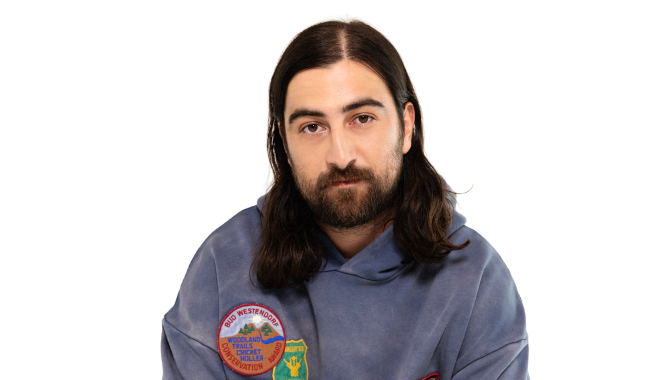

Jay Shetty & Noah Kahan on Impostor Syndrome, Anxiety & The Pressure of Success
In this On Purpose episode, Jay Shetty sits down with Noah Kahan, a Grammy-Nominated singer and songwriter, who rose to fame with his album Stick Season. In this interview, he gave the audience insight into the release of his new album, The Great Divide, and discussed his Netflix documentary, Noah Kahan: Out of Body.
Have you ever wondered if the very things that make you successful—your pain, your vulnerability, and your deepest insecurities—are also the things you are most afraid of losing?
In this On Purpose episode, Jay Shetty sits down with Noah Kahan, a Grammy-Nominated singer and songwriter, who rose to fame with his album Stick Season. In this interview, he gave the audience insight into the release of his new album, The Great Divide, and discussed his Netflix documentary, Noah Kahan: Out of Body.
Sharing a Piece of Himself
Noah Kahan explained to Jay Shetty that filming his documentary was more than a promotional exercise; to him, it was also a form of therapy. He successfully compartmentalized the filming process so he could be his most authentic self without constantly worrying about the audience.
When he first saw the footage, Kahan realized that it was a rare opportunity to watch his family dynamics through an external lens. He told Jay Shetty that he observed their interactions and concluded that they are good to each other and genuinely funny, which he believes to be a gift.
However, he is still struggling with the transition from discussing his insecurities in private with his therapist to exposing them to the wider audience. He told Jay Shetty that he is still learning how to talk about these feelings while constantly worrying about how the public will perceive his vulnerabilities.
Born to Perform
Noah Kahan grew up in Vermont as one of four siblings, the middle child. He told Jay Shetty that he was the third, after an older brother and sister, and that he had another younger brother. As a child, Kahan was often in his own world; despite his creativity and ambition, he admitted he was distracting and would act out at the dinner table to attract attention.
When he was a child, Kahan performed at a senior citizens’ home in Hanover with his father, and they played a song about aging. In that moment, he realized that he wasn’t as good as he thought himself to be. However, the experience was unique: it was Kahan’s first time on stage, and the only time he and his father had performed for anyone outside the family until they filmed the documentary.
Kahan told Jay Shetty that he was a smart student at school, but he felt that each year was a delay in his true mission to become a musician. At the end of sixth grade, he wrote a letter to his future self, demanding to have a record deal by high school graduation. Kahan achieved this goal.
Music as an Escape
In the years preceding his global fame, Kahan found an escape in music. He revealed to Jay Shetty that he felt a profound disconnect between the person he presented to the world and who he was deep inside. At school, he was the class clown; he was loud and annoying, and constantly sought acceptance from his peers.
However, at home, Kahan allowed himself to be vulnerable and sad, and used music as an outlet for his early struggles with mental health. He told Jay Shetty that music felt like his special friend, who made him finally feel good in his own skin. Yet this feeling has sadly vanished from his life.
Kahan noted that vulnerability has become a brand, and he worries that the intention behind his writing has shifted. Sometimes he fears he isn’t admitting his true feelings, and instead only sounds sad. Becoming a renowned musician means there is pressure to market his own sadness for the next album cycle, he admitted.
Unable to Live in the Moment
Despite his massive success, Noah Kahan’s fear of it ending in an instant haunts him. He confessed that he isn’t able to fully live in the present moment for fear it might suddenly end, and he is constantly looking back to a simpler, easier place.
Kahan also struggles with imposter syndrome; he is afraid that his decade-long work will be in vain and that he will need to find success in a different way. He told Jay Shetty that his performance at Fenway Park (documented in the film) was a rare exception when he felt fully present, looking out at the fans. Showing his most authentic side in the documentary is what makes him relatable to his audience.
Overcoming Writer’s Block
There is a direct link between an artist and his creation. Noah Kahan told Jay Shetty. He believes they are what they do, and the work becomes their identity. When a writer can’t express themselves, they feel like failing as a person, and admitting to having writer’s block is like admitting a failure of the self.
However, you are never alone in your struggles. Kahan told Jay Shetty that he had reached out to other artists who had experienced similar burnout and success, and was immensely relieved to learn they had faced similar challenges. Similarly, Jay experienced writer’s block when preparing to write his third book, and it took him 12 months to figure out what to write about. Kahan agrees, noting that creativity forces you to start from scratch every time, and worrying about the block becomes a self-fulfilling prophecy.
Feeling Deeply While Healing
For a long time, Noah Kahan believed he had to be unhealthy or in emotional pain to create truly good music. He admitted to Jay Shetty that, despite having OCD, he refused treatment for years because he feared it would dull his creativity. He believed that, unless he was genuinely suffering, his feelings wouldn’t be real enough for his audience.
On a trip to Joshua Tree National Park, Kahan realized that even the most beautiful landscape couldn’t heal his internal struggles; it was then that he finally chose to prioritize his well-being. Kahan told Jay Shetty that getting the necessary help showed him he could still feel sadness and think deeply, but he was relieved of the rabbit holes of obsession. This shift allowed him to find his voice again and understand that healing and making authentic art don’t exclude each other.
Sharing Feelings with His Family
Kahan opened up to Jay Shetty about his recent work around his family, especially his parents’ divorce and his father’s brain injury. He regrets not talking about these events with his family sooner, and only doing so for the documentary or through his music, which millions of people listen to.
To avoid conflict, Kahan writes things down in a journal and then sends them to streaming platforms; this way of communicating his feelings often leaves his family blindsided. Fortunately, the documentary became a means of being kinder and more honest with his family.
Kahan admitted to Jay Shetty that watching the documentary with his family was stressful, but it ultimately brought them closer. He was able to tell his father things he didn’t have the courage to express in person, such as apologizing for being impatient with his injury. He believes that watching their interactions from a third-person perspective allowed him and his family to see each other’s pain in a way that regular family gatherings don’t.
The Weight of Projection and Perception
Noah Kahan told Jay Shetty that therapy and producing the documentary shattered the projection he placed on others. He used to assume that his father felt the same worry and shame about his injury that Kahan felt, only to realize that his father was, in fact, quite happy with his life. Understanding that every person has a unique perception of the same event has been a huge lesson for him.
Similarly, at the 2024 Grammys, Kahan felt like the least cool guy in the room. He had shifted his value to the hope of winning, and when he lost, he felt like he had let everyone down, including his family, team, and fans. He told Jay Shetty that he projected his need for validation externally, onto the people around him. Now, he feels confident about the story that he can tell, rather than the awards that someone else votes on.
Body Dysmorphia in Men
Noah Kahan opened up to Jay Shetty about his struggles with body dysmorphia; he explained that it’s a dream-like stance that changes every day. However, it remains a prominent part of his internal dialogue. When he performed his song The Shape of My Shadow on World Mental Health Day, Kahan was surprised by the response he received from other men in his crew, who confessed they struggled with the same issues.
Noah Kahan explained to Jay Shetty that body dysmorphia is almost never about the body itself, but about how we think about it. Therefore, he believes it’s crucial to have these conversations, especially for men, and break the silence around image and self-worth. He hopes his honesty can help bring people together through shared vulnerability, regardless of their background.
Allowing Goodness in
Finding a balance is essential when you become famous, Jay Shetty noted. He believes that, in order to survive the highs and lows of public life, one must detach from both the good and the bad: take the good in as fuel for the heart rather than the ego, filter the bad to find constructive lessons, and set aside all other negativity.
Kahan admitted that, in the past, he used to reject the good because of a superstitious fear – he believed that accepting it would make it disappear. However, he is learning to allow more positivity and openness in his heart and life. His album, The Great Divide, represents the space he is learning to bridge between his art, family, and his own healing heart.
More From Jay Shetty
Listen to the entire On Purpose with Jay Shetty podcast episode “NOAH KAHAN: Imposter Syndrome, Anxiety & The Pressure of Success (What He’s Never Shared Before)” now in the iTunes store or on Spotify. For more inspirational stories and messages like this, check out Jay’s website at jayshetty.me.
Disclaimer: This episode reflects Noah Kahan’s personal experiences and perspectives. It is not medical, psychological, or therapeutic advice. Any references to health, diet, or lifestyle practices are his individual choices and may not be suitable for everyone. Results and experiences vary. Always consult a qualified professional before making changes to your health, wellness, or personal care routines.
Sign up for the only email that puts purpose at the center of your day.


Looking for greater meaning? This quiz shows you how to live with purpose every day.
Take the Quiz
Dreaming of becoming a life coach? This quiz tells you if a coaching career is right for you.
Take the QuizDreaming of becoming a life coach? This quiz tells you if a coaching career is right for you.
Take the Quiz
Everyone communicates differently. Discover your own personal fight style now.
Take the Quiz
Understanding your role in a relationship is the first step to making things work.
Take the Quiz

