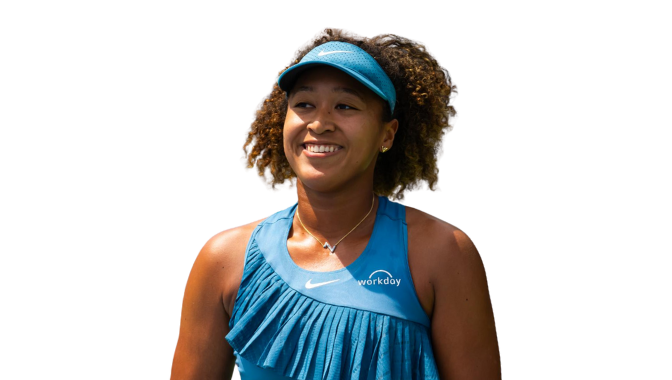

Jay Shetty & Naomi Osaka ON How She Found Real Self-Worth
In this On Purpose episode, Jay Shetty was joined by Naomi Osaka, a four-time Grand Slam champion who is the first Asian player to secure the world number one ranking for 21 weeks. Beyond her incredible career on the court, Osaka is a prominent global advocate for social justice and mental health, having been named one of Time's 100 most influential people twice. She has also expanded her portfolio to include her production company, Hana Kuma, and her skincare line, Kinlò.
Can the world's highest-performing athletes truly separate their self-worth from their wins and losses?
In this On Purpose episode, Jay Shetty was joined by Naomi Osaka, a four-time Grand Slam champion who is the first Asian player to secure the world number one ranking for 21 weeks. Beyond her incredible career on the court, Osaka is a prominent global advocate for social justice and mental health, having been named one of Time's 100 most influential people twice. She has also expanded her portfolio to include her production company, Hana Kuma, and her skincare line, Kinlò.
The Courage to Open Up About Mental Health and Shame
Naomi Osaka admitted to Jay Shetty that opening up publicly about her struggles was not easy. She felt embarrassed about how she had approached it, but she is now happy that she opened up. The tennis player believes it created a path for more discussions, and it helped humanize more athletes. Osaka regrets not always choosing the best words in that moment, as she tends to make decisions on a whim.
When the tennis player took a break during the French Open, she was dealing with intense feelings of shame and embarrassment. She felt like she was going against everything an athlete stood for, such as the expectation of not showing any cracks in her armor. Osaka told Jay Shetty she felt alone, especially as tennis is a solo sport. After pulling out, she flew home to LA and refused to leave her house for about two weeks, avoiding the outside world.
Impulsivity vs. Discipline
Osaka identifies as a very impulsive person. She admitted to Jay Shetty that her spontaneity got her in trouble as a child. However, when she is on the tennis court, her impulsivity helps her get creative with her shots. The tennis player sees herself as half creative and half focused, which keeps her balanced and prevents her from losing sight of her goals.
Osaka opened up about her guilty pleasures, like nighttime drives around LA. She told Jay Shetty that sometimes people like to race her, without knowing who is sitting behind the wheel, and she sometimes joins the game. To her, this is an outlet. However, she got a lot safer with age, especially since she became a mother.
Identity Rooted in Haitian and Japanese Culture
Her Japanese and Haitian heritage shapes Naomi Osaka's identity. She told Jay Shetty she appreciates the generosity of Haitian people, who tend to give even when they have very little left for themselves. The tennis player tries to incorporate this altruistic spirit into her personality. On the other hand, the Japanese culture taught Osaka discipline. She believes the combination of these two cultures is the perfect yin and yang, balancing impulsivity with discipline.
Osaka moved from Japan to America when she was three years old. While the transition felt easy for her, her older sister had a tougher time because she only spoke Japanese. Unfortunately, her mother was scolded by an American teacher for talking Japanese to her children at home, as she was allegedly slowing their progress in learning English. Osaka wishes she had grown up bilingual, as she sees the benefits of it. She told Jay Shetty some words and concepts cannot be translated into English, yet she now only speaks her mother tongue with people she feels comfortable with.
Training Under the Richard Williams Blueprint
Richard Williams, the father of the Williams sisters, inspired Osaka's father. She told Jay Shetty she grew up living under this blueprint, unable to escape it, as her father wanted her to train for at least eight hours a day, just like the Williams sisters.
Naomi Osaka felt the pressure and had no choice but to succeed. She told Jay Shetty she would have felt strange not to, given her dedication and hard work she had invested in this sport. She also told Jay Shetty that her father was a stoic and rarely cracked jokes.
The Challenging Aftermath of the First Grand Slam Win
Winning her first US Open felt like a dream come true for Naomi Osaka, since she had always dreamed of playing Serena Williams in a Grand Slam final. Yet the circumstances around her winning were not merry, and she felt like she had to prove people wrong, especially to the voices that didn't see it as a clean victory. She felt relieved to win the Australian Open immediately after, confirming to herself that she was, indeed, a good player.
Naomi Osaka told Jay Shetty that the emotional aftermath of the US Open was challenging and, for a long time, she avoided processing the event. The tennis player remembers returning to her hotel late after the night's match, around 1:00 AM, and reading comments from people saying she didn't deserve to win or didn’t win fairly.
Serena Williams was kind to Osaka after the match, sending her a message. She admitted to Jay Shetty that she was star-struck by the interaction, because Serena Williams had always been her idol, and she considered her the greatest tennis player of all time. Osaka and Williams met later, too, and the Japanese tennis player felt honored when her idol asked her to take a photo with her daughter.
Detaching Self-Worth from Winning
Before becoming a mother, Osaka's entire identity was tied to being a tennis player, meaning she valued herself as a person based on whether she won or lost. She admitted to Jay Shetty that it's natural to put all self-worth into something you work so hard at.
But motherhood has profoundly changed Osaka, making her a lot more patient and carefree at the same time. She now views issues that once bothered her as pointless or less consequential, because she learned there was so much more to life. The tennis player no longer feels her life is over if she loses a match.
To achieve this level of detachment, Osaka underwent a series of learning experiences, surrounded by people who genuinely cared about her. She was constantly reminded that her tennis success was not the main factor in her entire self-worth. Now, she finds joy in her daughter's presence, and the little one's smiles make Osaka's day.
Putting Her Feelings onto Paper
To clear her mind, Osaka often journals about her thoughts, feelings, gratitude, or what she has learned. She told Jay Shetty that writing became a critical tool for conveying her thoughts, especially since she doesn't see herself as a great speaker. She tends to keep her writing private, but would share it sometimes if she feels it would help someone else.
Osaka recently shared a snippet of her current writing, in which she reflected on her childhood. Although she never disliked her life, she sometimes wished she were somebody else, like when she used to see other children enjoying their summer vacations while she was constantly training. She admitted to Jay Shetty that she sometimes feels like being on a race track and experiencing an overwhelming dread of being lapped or left behind. The tennis player eventually made peace with her competitiveness because she understood that suppressing a thought would only intensify it.
Returning to the Court
Returning to tennis after giving birth was not easy. Osaka shared that her pregnancy was difficult; she was often sick and gained weight, which made her train hard even up until the birth. Then, only a week after giving birth to her daughter, she began training again. Although her decision caused an online stir, the tennis player explained that her body was used to training since she was very young. She added that everyone’s body is different.
Osaka spent most of the past year trying to find herself back, but she soon noticed she is a different person now and accepted her new self. She told Jay Shetty that comparing your current self to an older version is doing yourself a disservice. Osaka knows her path is unique, and is trying to keep critics from getting to her. She also became more closed off after noticing that some reporters treated her as less human, seeking only a sensational headline.
Giving Back
One of Osaka's key mentors was Kobe Bryant, whom she saw as a big brother. She remembers him telling her to imagine herself as a lion and other people's opinions as flies around her eyes. The tennis player told Jay Shetty that she now feels ready to pass her knowledge to the next generation and mentor others.
Naomi Osaka admitted that one of her main goals was to earn enough to retire her working mother. Currently, her biggest goal is for her daughter to reach an age where she can see and understand her playing tennis.
Staying Peaceful
On game days, the tennis player follows a strict routine that includes meditation, showering, and eating the same specific breakfast, followed by light hitting, listening to music, and then playing the match. She finds herself constantly playing the match in her head, in her dreams, the night before major events, which helps her prepare mentally for when the time actually comes.
The beach is a happy place for the tennis player. Whenever she needs to reconnect with her inner self, she retreats to think or talks to her sister. Naomi Osaka told Jay Shetty that it's essential to have support during difficult times. She encourages listeners going through a rough patch to ask for help and not struggle alone in silence.
More From Jay Shetty
Listen to the entire On Purpose with Jay Shetty podcast episode “Naomi Osaka: “I Used to Think Losing Meant My Life Was Over” Sharing Her Truth of Navigating Shame, Public Pressure & How She Found REAL Self-Worth” now in the iTunes store or on Spotify. For more inspirational stories and messages like this, check out Jay’s website at jayshetty.me.
Sign up for the only email that puts purpose at the center of your day.


Looking for greater meaning? This quiz shows you how to live with purpose every day.
Take the Quiz
Dreaming of becoming a life coach? This quiz tells you if a coaching career is right for you.
Take the QuizDreaming of becoming a life coach? This quiz tells you if a coaching career is right for you.
Take the Quiz
Everyone communicates differently. Discover your own personal fight style now.
Take the Quiz
Understanding your role in a relationship is the first step to making things work.
Take the Quiz