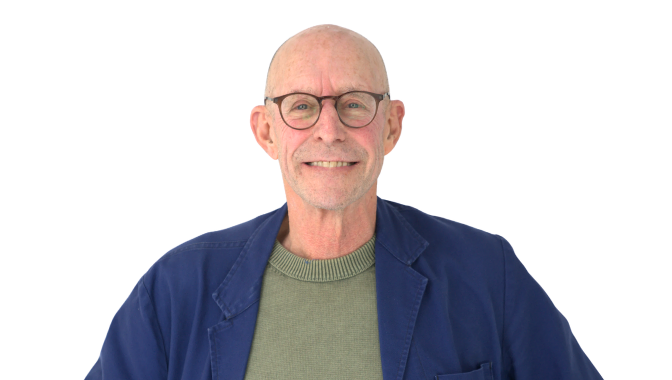

Jay Shetty & Michael Pollan ON The Hidden Cost of Distraction
In this On Purpose episode, Jay Shetty welcomes Michael Pollan, an award-winning journalist and best-selling author whose work has reshaped how society views food, nature, and the human experience.
What if the very thing that makes us human (our consciousness) is currently under siege by the technologies we created to enhance our lives?
In this On Purpose episode, Jay Shetty welcomes Michael Pollan, an award-winning journalist and best-selling author whose work has reshaped how society views food, nature, and the human experience.
Known for his investigative depth and ability to bridge the gap between material science and metaphysical wonder, Michael Pollan discussed his latest exploration into the depths of the mind with Jay Shetty. His newest book, A World Appears, dives into the enigmatic nature of consciousness, perception, and the vital importance of living with intention in an age of digital distraction.
Learning Along with the Reader
Michael Pollan revealed to Jay Shetty that his writing process is a quest or an education rather than a lecture. He often starts on page one as someone who knows nothing about the subject, asking the most basic foundational questions, such as "Where does my food come from?" or "What is consciousness?" He prefers starting with the question, unlike science writing, which starts with the conclusions, because, to him, it's like saying the punchline before the joke itself.
Pollan explained to Jay Shetty that simple questions often lead to incredibly complex answers; he discovered this when tracing the industrial food chain back to its pharmaceutical-heavy origins. His investigative spirit led him to explore many topics, the most recent of which was consciousness. He admitted that some of the drivers behind it were his experiences with meditation and psychedelics, which he described as "smudging the windshield" of our consciousness.
How Galileo Changed the Course of Science
Michael Pollan told Jay Shetty that science turned away from exploring consciousness in the 17th century. He explains that Galileo decided to steer science toward the objective, measurable, third-person reality while leaving the unseen to the Church.1 This way, science and religion would no longer be in conflict with each other, since they both have their focus points. However, this led science to dismiss the study of the soul, consciousness, and internal experience for centuries.
Only around 1990 did physical sciences start to take consciousness seriously again. Following the discovery of DNA, Francis Crick sought to clarify consciousness through a scientific reductionist approach, looking for neural correlates of consciousness.2 He hoped to find a specific group of neurons linked to subjective experiences.
Yet even the most brilliant scientists weren't able to fully comprehend and explain how three pounds of gray matter (our brains) can generate the perspective of self, such a personal and individual experience. Pollan told Jay Shetty that there are currently roughly 22 theories on what consciousness is and where it comes from, which means no consensus has been reached, and that science is still lost on this matter.3
Regain Control Over Your Consciousness
Jay Shetty noted that people today feel too busy with work and entertainment to care about understanding consciousness. However, Pollan believes that understanding consciousness is the key to becoming more aware; to him, this is true freedom. He argues that we risk becoming zombies living on autopilot in the absence of an interior awareness.
According to Michael Pollan, modern technologies and corporations are designed to occupy our minds and think our thoughts for us. He told Jay Shetty that, while we are conscious when we scroll on social media, that consciousness is passive. In this form, we surrender our attention to political ideologies or corporate algorithms instead of seeking internal answers.
Pollan added that humans are the only species that can afford not to be present in the world and still be safe – every other animal must remain fully conscious of its surroundings at all times to ensure survival. He told Jay Shetty that by reclaiming our consciousness, we can avoid the psychosis of forming emotional attachments with machines rather than with other human beings.
Technology Alienates Us From Our Consciousness
Michael Pollan believes that the effects of the digital revolution have already been felt in human connection. Social media has hacked our concentration and shortened our attention span, while Artificial Intelligence (AI) is hacking our attachment at a much deeper level. In his view, AI is so enticing because it is frictionless, unlike real-life interactions.
Chatbots are designed to be fawning; they never criticize the user and always provide instant gratification. Pollan explained to Jay Shetty that this type of easy interaction lacks the healthy complexity and surprise found in human relationships. He added that humans love praise and have a natural tendency to anthropomorphize things (like children do with their stuffed animals).
However, Pollan warns against giving away your consciousness to machines that are designed to keep you hooked for as long as possible. He even recounted cases in which people have become more attached to chatbots than to their own families. It's now common practice to turn to our phones when we have trouble being alone with our minds, because our thoughts can be scary, filled with self-criticism and rumination.
Seeing Yourself from the Inside
Michael Pollan and Jay Shetty agree that meditation is a beneficial tool for reclaiming consciousness. Pollan shared his experience during a four-day silent meditation, during which he discovered the power of making no eye contact. He explained that a large part of our social existence is performance, and we constantly feel pressured to present ourselves to others in a certain way.
During this retreat, where eye contact and social interactions were removed, Pollan felt extremely free simply by being himself, without the need to perform for others. Similarly, Jay Shetty recounted his experience in an Indian monastery, where there were no mirrors, so you couldn't see your reflection, removing the layer of self-criticism that comes from constantly being confronted with your own image. Jay and Michael Pollan agree that meditation and consciousness-altering experiences are tools for shrinking the ego and moving beyond the walls the self has built.
Understanding the Ego
In Michael Pollan's opinion, the self offers a paradox: we value self-confidence, yet the ego can often be oppressive. He describes it as a defensive structure useful for writing books or doing podcasts, but, at the same time, it disconnects us from the world around us and drives rumination and negative spiraling thoughts.
Michael Pollan shared his experience with psilocybin with Jay Shetty – to him, it was transformative, as he felt his self dissolving in a pool of blue paint, which then merged with Bach's music his guide was playing in the background. He felt connected to something much larger than himself and was left in awe, as coined by researcher Dacher Keltner.4 Pollan added that, in one experiment, people were asked to draw themselves as stick figures. Then, they were shown a video of awe and asked to re-draw themselves, which they now did at half the original size, leading the researchers to conclude that experiences of awe are a way of shrinking the self.5
Theories About Consciousness
Michael Pollan told Jay Shetty that science still hasn't found an answer to where consciousness lives in our bodies; while we assume it's produced by neurons in the brain, there is no hard evidence to sustain this claim. He shared how different theories have tried to explain consciousness:
- The Panpsychism Theory is the idea that everything possesses some elemental bit of psyche or consciousness, down to the smallest particle.
- The Idealism Theory suggests that consciousness precedes matter and that our minds are merely individual pools within a larger field.
- The Transmission Theory posits that our brains act like radio receivers, channeling a consciousness that exists outside of them.
While these are all theories yet to be verified, Pollan suggests keeping an open mind, because quantum physics has already validated previously dismissed concepts like quantum entanglement.6
Life-Altering Psychedelic Experiences
Michael Pollan shared with Jay Shetty that psychedelics can treat mental health issues like OCD, depression, and addiction.7 He explained that our brain has a Default Mode Network (DMN), a set of interconnected brain regions that activate when our brains wander when we rest. This is where the ego rests and where we travel into the past and future to construct our identity.
For certain mental health conditions, such as OCD, the brain gets stuck in a loop of repetitive negative thoughts. The more we think about something, the more deeply ingrained that thought remains in our brains. Pollan compared the mind to a hill covered in snow, where every thought is a sled. Over time, the sleds create deep tracks, and it becomes impossible to go down the hill without falling into those same grooves.
According to Michael Pollan, the psychedelic experience is like a fresh snowfall that fills the old grooves, allowing the mind to take a new, healthier path. He shared with Jay Shetty stories of heavy smokers and OCD patients whose lives were transformed in a single afternoon; they reported that the revealed truths they experienced while on psychedelics carried a noetic authority that ordinary thoughts lack.
Redefining the Human
Michael Pollan told Jay Shetty that we are approaching an era when we might need to redefine what it means to be human. The more data we gather, the more we understand that other beings, such as animals and plants, possess sentience and a point of view. This raises the question of whether we are the only conscious beings on the planet.
Moreover, with the rise of AI, machines can become more intelligent than humans, but they will never be able to feel the same way we do, since they lack mortality and vulnerability, key to our human experience. In Pollan's opinion, this discrepancy will force humans to move closer to the animal world.
Michael Pollan and Jay Shetty agree that feelings have no meaning outside a body of flesh and blood, and that we won't live forever. Currently, we still treat large parts of our environment, especially farmed animals, as unconscious matter. He hopes that by recognizing consciousness in other life forms, we will become more morally considerate and respectful toward the natural world.
More From Jay Shetty
Listen to the entire On Purpose with Jay Shetty podcast episode “Michael Pollan: The Hidden Cost Of Constant Distraction (Use THIS Practice To Reclaim Your Attention, Clarity, And Inner Freedom)” now in the iTunes store or on Spotify. For more inspirational stories and messages like this, check out Jay’s website at jayshetty.me.
Disclaimer: The practices described are based on personal experiences and preliminary research. They are not medical advice, nor are results guaranteed. Individual outcomes vary, and some claims are still being studied. Always consult a qualified healthcare professional before beginning any new health, wellness, or therapeutic practice.
1Galileo Galilei, Letter to the Grand Duchess Christina of Tuscany, 1615, https://web.stanford.edu/~jsabol/certainty/readings/Galileo-LetterDuchessChristina.pdf.
2Francis Crick and Christof Koch, “Towards a Neurobiological Theory of Consciousness,” Seminars in the Neurosciences 2, no. 4 (December 1990): 263–75.
3A. K. Seth and Tim Bayne, “Theories of Consciousness,” Nature Reviews Neuroscience 23 (2022): 439–52, https://doi.org/10.1038/s41583-022-00587-4.
4Keltner D, Haidt J. Approaching awe, a moral, spiritual, and aesthetic emotion. Cogn Emot. 2003 Mar;17(2):297-314. doi: 10.1080/02699930302297. PMID: 29715721.
5Bai, Y., Maruskin, L. A., Chen, S., Gordon, A. M., Stellar, J. E., McNeil, G. D., Peng, K., & Keltner, D. (2017, May 8). Awe, the Diminished Self, and Collective Engagement: Universals and Cultural Variations in the Small Self. Journal of Personality and Social Psychology. Advance online publication. http://dx.doi.org/10.1037/pspa0000087.
6John F. Clauser and Michael A. Horne, “Proposed Experiment to Test Local Hidden-Variable Theories,” Physical Review D 10, no. 2 (1974): 526–35.
7Dominiak M, Gędek A, Modrzejewski S, Permoda-Pachuta A, Antosik AZ. Efficacy and Safety of Psychedelics in Mental Disorder Cases: An Umbrella Review of Meta-Analyses of Randomized Controlled Trials. J Clin Med. 2025 Dec 29;15(1):253. doi: 10.3390/jcm15010253. PMID: 41517502; PMCID: PMC12786876.
Sign up for the only email that puts purpose at the center of your day.


Looking for greater meaning? This quiz shows you how to live with purpose every day.
Take the Quiz
Dreaming of becoming a life coach? This quiz tells you if a coaching career is right for you.
Take the QuizDreaming of becoming a life coach? This quiz tells you if a coaching career is right for you.
Take the Quiz
Everyone communicates differently. Discover your own personal fight style now.
Take the Quiz
Understanding your role in a relationship is the first step to making things work.
Take the Quiz