


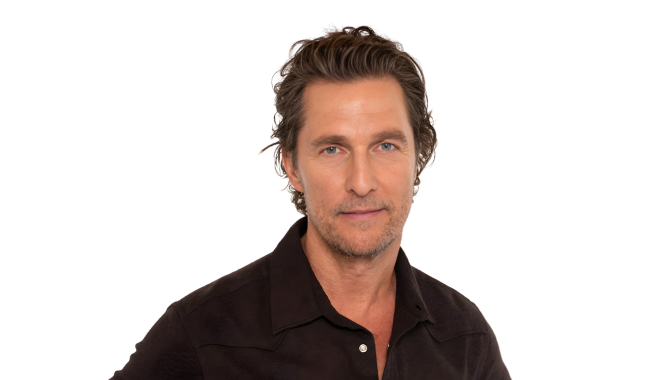

Jay Shetty & Matthew McConaughey ON The Keys to a Meaningful Life
In this On Purpose episode, Jay Shetty's guest was Academy Award-winning actor, author, and storyteller Matthew McConaughey. McConaughey has spent decades exploring the intersections of intention, courage, and heart, and, in this interview, discussed his new book, Poems and Prayers.
Have you ever wondered if your midlife crisis is actually your greatest opportunity to expand your life’s horizon and discover more of your potential?
In this On Purpose episode, Jay Shetty's guest was Academy Award-winning actor, author, and storyteller Matthew McConaughey. McConaughey has spent decades exploring the intersections of intention, courage, and heart, and, in this interview, discussed his new book, Poems and Prayers. He talked about the architecture of trust, the importance of moseying through life, and why he believes the universe is constantly conspiring to make us happy.
A Slow Day Anatomy
Matthew McConaughey admitted to Jay Shetty that he rarely has days without plans, phone calls, or commitments. However, his ideal slow day involves getting nine-and-a-half hours of sleep, waking up at 9:30 AM, and moseying down for a matcha tea prepared by his wife.
For McConaughey, starting his day with the basic connection of fitting eight pieces of a puzzle together is pure satisfaction. He told Jay Shetty that this simple activity gives him a sense of accomplishment early in the day and sets his mood. Then, he would catch fifteen minutes of morning sun, read the news, and eventually do some physical activity, such as tennis or a long, lazy gym workout, during which he would stop to write.
McConaughey's day would conclude with him cooking dinner for his family (rib eye or tuna melts), then watching a show with his children and winding down with his wife.
Maintaining a Beginner’s Mind
Matthew McConaughey loves to be on task and immensely enjoys the process of building things. He told Jay Shetty that he is happiest when he has a strict schedule and a sense of accomplishment, although he also acknowledges his need for personal growth and art. Until four years ago, when he picked up tennis, McConaughey didn't have any hobbies. He mistakenly thought that writing was one until he realized that it was part of his work.
According to McConaughey, it's important to maintain a beginner's mind, so he tries to give himself permission to daydream about everything his imagination creates. He admitted to Jay Shetty that he sometimes feels anxious when he does it, because a part of his mind wants him to actively work on future tasks; however, he understood that letting himself lose track of time usually pays off in the end.
Four More Lanes
Matthew McConaughey opened up to Jay Shetty about the transition from his favorite decade, the forties, to the fifties, now that he is 56. Many view this time as a midlife crisis, but he prefers to call it a midlife opportunity instead. McConaughey believes people who struggle during this time don't give themselves enough credit for what they have already built in life. For him personally, being in his fifties is about expressing himself without filters.
As an actor, Matthew McConaughey told Jay Shetty that his performance passes through the script, the director, the camera, and the editor before reaching the audience. In his fifties, he ponders the purpose and impact of his life, similar to a documentary. He asks himself whether his actions are entertaining, educational, inspiring, or fulfilling, and explores the potential effects they have on others. If it were to name this chapter of his life, McConaughey would call it Four More Lanes, as an expansion of his life beyond the eight lanes he already mastered, referring to his potential.
Mistakes Are Lessons
People tend to denigrate their past selves and mindsets once those selves and mindsets are no longer of service. Sometimes, we even reject the very things that led to our current success because they don't fit our new reality. McConaughey suggests that we should instead giggle at our past embarrassments and recognize that even the egotistical phases might have given us the confidence we needed to learn a hard lesson.
Matthew McConaughey told Jay Shetty that the life ahead of us is a mystery, and our past is a science, because we can only connect the dots in hindsight. He added that it's essential to have a good relationship with failure, because if we aren't failing, it means we aren't taking enough risks.
Western cultures view time as linear, and every mistake we make seems like a step backward. However, Jay Shetty shared that in Eastern traditions, failure is seen as simply part of a cyclical process. There, the focus lies more on the inner world rather than outward progress.
Words Have Power
Matthew McConaughey admitted to Jay Shetty that he struggled for forty years with the definition of the word "humility." He believed that being humble meant being submissive, and he felt passive, with his shoulders caving in. However, this changed when he heard yet another definition of humility, which framed it as admitting that you have more to learn. This new perspective gave him a surge of confidence and he suddenly felt his body posture also change, from slumped shoulders to holding his chin up.
People are easily influenced by words, McConaughey noted. He told Jay Shetty that, on one of his trips to Washington D.C., following a mass shooting, people on the far right were more open to the term "gun responsibility" than to "gun control". He believes that control sounds like a mandate that people want to resist, while responsibility is a value they are proud to uphold. This slight change in presentation allowed for a conversation with a public that would have otherwise rejected it.
Is Delayed Gratification Selfish?
According to Matthew McConaughey, religion is purely selfish because it's based on the idea of delayed gratification, asking you to make sacrifices today for later rewards for you or your children. However, karma doesn't guarantee reciprocity; it ensures that the universe will react in other ways, so it's not helpful to falsely hope for a direct exchange when you help others.
McConaughey notes that while successful individuals can plan for the future, people in extreme misery or poverty can't afford it because their only focus is on surviving the night or paying rent. He shared with Jay Shetty a story from post-Katrina Mississippi about a woman who needed guidance on taking one solid step without falling after her home was destroyed. Concentrating on one step at a time is the most compassionate way to assist someone who is suffering, because it puts less pressure on them than thinking about the entire mountain they need to climb.
Faith as a Practice
A good portion of religion revolves around the disparity between faith and action. Jay Shetty shared a scene from the Bhagavad Gita in which the archer Arjuna has a crisis of faith on the battlefield, and God—acting as his charioteer—tells him to "think of me and fight." The story reminds readers of the importance of maintaining spiritual focus while fulfilling their worldly responsibilities, without falling into either extreme.
McConaughey admitted to Jay Shetty that he identifies with the two extremes: the fatalist who leaves everything to fate and the person who believes they are fully responsible for everything. During his agnostic years, he thought he was entirely accountable for his life, only to realize that he was behind the steering wheel of his life, but Divinity was, too.
In contemporary society, people have lost a so-called third place, which used to be a communal hub, outside of home and work. Typically, people would gather weekly at a place of worship that was distinct from the other two. However, third places are becoming extinct in modern society. Matthew McConaughey admitted to Jay Shetty that he missed the ritual of that space and feels he might deprive himself by not fully surrendering to a communal faith practice.
Guided by Trust
Matthew McConaughey described himself to Jay Shetty as someone who prioritizes trust. He believes that giving people significant trust right from the beginning often empowers them to become more reliable, as they recognize a dignity in themselves they hadn't seen before. While he also experienced betrayal, McConaughey asserted that living without trust is the worst alternative.
Now, McConaughey has the confidence to shut the door and remember where he left his keys, rather than needing to see everything laid out. He told Jay Shetty that, while filming True Detective, his relationship with God felt so strong, he could dive into the dark nihilism of his character for five months without needing to look over his shoulder.
Moreover, McConaughey subscribes to the idea of cyclical time, which allows him to maintain trust while he is away from his family for extended periods of time. Whenever they are apart, he reminds himself that he and his children are all under the same sun or moon, regardless of their physical location on the globe.
Chasing the Infinite
Matthew McConaughey opened up about his pursuit of unanimous greatness and his realization that perfection is unattainable. He told Jay Shetty that, while he always believes he can reach for the infinite, he has never delivered a performance that lived up to his own expectations. McConaughey aims to ensure that even a scene that isn't magical is at least truthful.
When it comes to validation, McConaughey doesn't seek it from the public because he considers it fickle. Instead, he finds validation from his wife and children and the council in the sky, consisting of his late father, Penny Allen, and John Chaney. He told Jay Shetty he imagines these mentors watching his decisions, reacting to his decisions either by celebrating or leaning back in disapproval.
More From Jay Shetty
Listen to the entire On Purpose with Jay Shetty podcast episode “MATTHEW MCCONAUGHEY: The KEYS to a Meaningful Life (Love, Faith, Family & Turning Failure into Growth)” now in the iTunes store or on Spotify. For more inspirational stories and messages like this, check out Jay’s website at jayshetty.me.
Sign up for the only email that puts purpose at the center of your day.


Looking for greater meaning? This quiz shows you how to live with purpose every day.
Take the Quiz
Dreaming of becoming a life coach? This quiz tells you if a coaching career is right for you.
Take the QuizDreaming of becoming a life coach? This quiz tells you if a coaching career is right for you.
Take the Quiz
Everyone communicates differently. Discover your own personal fight style now.
Take the Quiz
Understanding your role in a relationship is the first step to making things work.
Take the Quiz
