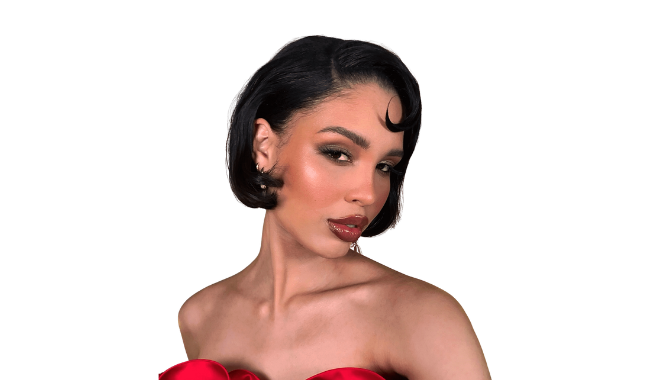
Jay Shetty & & Lilly Singh ON How to Build True Confidence
In this On Purpose episode held at the Ellie Calkins Opera House in Denver, Jay Shetty welcomed his long-time friend and renowned creator, author, and filmmaker, Lilly Singh. Singh was a pioneering creator on social media and one of the first bisexual women of color to host a late-night talk show.
How can you fall in love with yourself when you were taught to meet others’ expectations?
In this On Purpose episode held at the Ellie Calkins Opera House in Denver, Jay Shetty welcomed his long-time friend and renowned creator, author, and filmmaker, Lilly Singh. Singh was a pioneering creator on social media and one of the first bisexual women of color to host a late-night talk show. She came on the podcast to openly discuss her journey, including both joyful and sad moments that shaped who she is today.
Breaking Rules and Being First
Throughout her career, Lilly Singh has been celebrated for many "firsts," yet being a trailblazer is not easy. She told Jay Shetty that she experienced significant anxiety because there was nobody around her to offer advice, no roadmap to follow, and no prior failures or wins to study and learn from. Her journey wasn't easy, and it often felt lonely and scary, she admitted.
While in school pursuing a psychology degree, Singh started making YouTube videos. At that time, she was convinced that her path was a traditional one: get a degree, get married, have kids. It was something many women before her had done, and what she expected to do, too.
When she was born, her family was not thrilled to have a second daughter (her), as her parents wished for a son. Singh shared with Jay Shetty that she grew up believing her birth was not worth being celebrated, and she felt like she had to prove her worthiness in everything she did.
When she started making videos, Singh was in a really dark place, feeling lonely and confused because she was not fulfilling the purpose she thought she had. Her first video reached 70 viewers, but to her it was important that she could connect with a community and express herself freely, without fear of disappointing. This was the first time she felt alive, doing something for herself and breaking the rules.
Chasing Fame and Money to Prove Them Wrong
Lilly Singh admitted to Jay Shetty that the main driver behind her career choices was to prove wrong those who had doubted her. She started YouTube and agreed to host a late-night show to prove she could do it, though not many believed in her. She thought that everyone in her family would finally understand and respect her for gaining fame, influence, and money. She wanted her success to be measured in terms they could understand, such as how many people watched her videos or the size of her house.
It felt good to achieve these goals, she told Jay Shetty. But, inside, she still felt empty, because all her effort went toward proving others wrong instead of doing something for herself. This is how she embarked on a lifelong journey to teach herself to chase something else. Now she is working hard to prove herself right, which, to her, is more important than external validation.
Subconscious Cultural Burdens
Lilly Singh was unaware of the cultural expectations that were instilled in her from a young age. She admitted to Jay Shetty that only leaving home made her realize that they were keeping her from becoming her own person and evolving as an adult. She was told how to behave and what to do, because girls were expected to act in a certain way. Her parents were disappointed in her when she became the captain of a dance team, because, in their eyes, girls were not supposed to dance at events or get hired to dance.
Singh didn't realize when other people's beliefs became her own – she subconsciously internalized their comments about how she should behave or what she should and shouldn't do. It was only later in life that she realized she could make her own choices and not simply satisfy others' need for validation through her actions.
In 2019, Singh was offered the opportunity to host a late-night show, which she initially refused. She couldn't relate to the format due to her upbringing in an Indian household. However, when the offer came back, her team made sure to point out how historically significant it would be if someone like her were to host such a show. And so she accepted.
Public Life Is No Walk in the Park
Lilly Singh told Jay Shetty that performing the show for two seasons was the most difficult thing she had ever done. It took a toll on her mentally, emotionally, spiritually, and physically. She explained that the production was underfunded, and the shooting schedule was very tight – they shot 96 episodes in only three months. Additionally, the COVID-19 pandemic heavily impacted the show, and the second season was recorded fully on Zoom.
While the show was airing, Singh felt immense pressure. Headlines identified her as a bisexual woman of color, and people started to have expectations of her. She was told that a billion people were counting on her (Indians), the LGBTQ+ community, and women alike. Singh soon realized that she couldn't make all these people proud, and beat herself up for it for up to a year or two after the show ended; she felt like she let down women, queer people, brown people, and others.
Lilly Singh told Jay Shetty that it took her three years after the show ended to gain the confidence and self-love to realize that she could have simply said no to the pressure. It was not her job to make a billion people proud. She was fixated on incorporating all aspects of her identity into the show, so it didn't occur to her to decline that pressure. She was raised to take on the burden without question, and she applied this mentality also as a TV show host.
You Made It!
Lilly Singh couldn't have achieved her current level of confidence and self-awareness, hadn't it been for the struggles, she told Jay Shetty. Although she is committed to being a lifelong student, she believes that you need to be kicked from time to time, to learn some lessons you wouldn't otherwise be presented with. Singh also believes that every horrible moment has its silver lining.
If you feel stuck or overwhelmed by the weight of the world, Lilly Singh suggests seeing things in a positive light: so far, you have a 100% rate of surviving hardships. She recommends journaling about past experiences to remind yourself that, despite feeling like a failure, you, in fact, got through hard times. Negative experiences outweigh positive ones in our brains,1 and it's important to write down and reflect on past successes to find the confidence and resilience to move forward.
Practicing Grace
Because she always wanted to prove others wrong, Lilly Singh had created unrealistically high standards and expectations for herself. She was her harshest critic and obsessed over mistakes even though the overall job was a success. She told Jay Shetty that she later realized it was her way of feeling loved and cared for, and that she set the bar high not only for herself but also for others around her.
Now, Singh focuses on self-compassion and practices gratitude at the end of the day. She is giving herself compassion and grace when she needs it, and accepts that different people have different standards for themselves, and is more understanding of their ways of doing things.
Identifying Who Is Talking
Lilly Sngh told Jay Shetty that the key to managing internal struggles is not about getting rid of them; it's about learning how to live with them. She now acknowledges different parts of herself and has even named them differently, so she can recognize them:
- Susan: Her inner manager, who scolds her for relaxing.
- Todd: Her inner critic.
- Param Jeet: Her inner dictator who enforces "this or that" thinking.
- Jelly Bean: Her curious, fun voice.
- Hope: Her inner compassion, which provides grace.
- River: Her newest voice, representing her inner loneliness.
By naming the most recent voice River, Singh realized she was not a lonely person, but had only a part of herself that felt lonely. Todd and Susan are essential for performance and productivity. By identifying who is speaking and when, Singh can regain control and decide whether to listen to that voice.
As a life hack, Lilly Singh told Jay Shetty that she taught her ChatGPT to recognize the names of her inner voices. Now, when she is spiraling and talking to ChatGPT, the AI will analyze the situation and ask her questions related to that specific inner voice.
Lilly Singh also shared with Jay Shetty that she uses ChatGPT to reinforce the distinction between her true identity and professional achievements. Growing up, love was closely tied to her achievements, so she is still learning how to separate the person from the accomplishments. When she asked AI to describe her, without using any of her accomplishments, she cried; it described her as a compassionate friend who also cares deeply about animals.
Going for It
Singh's drive has shifted from proving others wrong to proving herself right; she shows herself that she can keep growing and learning. Her biggest goal is to make little Lilly proud. She told Jay Shetty that, previously, her work heavily focused on hustling; now, she can finally focus on the act of being instead of chasing. She believes that being mentally healthy and working on herself makes her a better actress and writer.
In 2024, Lilly Singh released her first feature film, Doin' It, which she produced, acted in, and wrote parts of. It's a sex comedy that addresses the taboos that she grew up with, focusing on shame, sex, and societal expectations of women. Singh told Jay Shetty that, before working on the movie, she called her mother to ask if she was allowed to make it. Her mother told her to go for it if it felt right. And so she did.
Singh told Jay Shetty that she wants to remain a lifelong learner because life constantly throws lessons at her, and she would never have everything figured out. She is currently trying to become less attached to the idea of herself that millions of subscribers knew, and instead simply be.
More From Jay Shetty
Listen to the entire On Purpose with Jay Shetty podcast episode “Lilly Singh: Stop Trying to Prove Yourself to Everyone Else! (#1 Mindset Shift to Build REAL Confidence & Self-Worth)” now in the iTunes store or on Spotify. For more inspirational stories and messages like this, check out Jay’s website at jayshetty.me.
1Vaish A, Grossmann T, Woodward A. Not all emotions are created equal: the negativity bias in social-emotional development. Psychol Bull. 2008 May;134(3):383-403. doi: 10.1037/0033-2909.134.3.383. PMID: 18444702; PMCID: PMC3652533.
Sign up for the only email that puts purpose at the center of your day.


Looking for greater meaning? This quiz shows you how to live with purpose every day.
Take the Quiz
Dreaming of becoming a life coach? This quiz tells you if a coaching career is right for you.
Take the QuizDreaming of becoming a life coach? This quiz tells you if a coaching career is right for you.
Take the Quiz
Everyone communicates differently. Discover your own personal fight style now.
Take the Quiz
Understanding your role in a relationship is the first step to making things work.
Take the Quiz