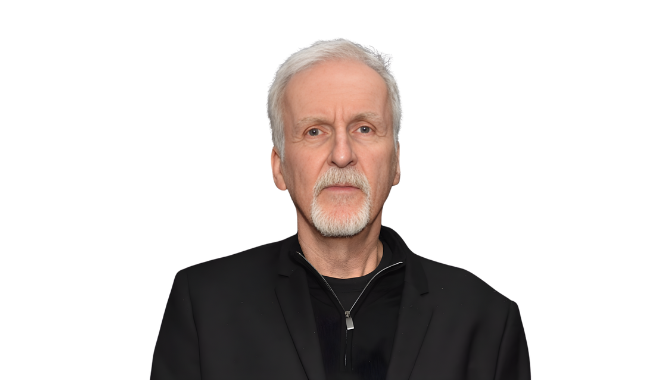

Jay Shetty & James Cameron ON How a Creative Mind Works
In this On Purpose episode, Jay Shetty welcomed James Cameron, a world-renowned filmmaker who produced iconic films such as The Terminator, Aliens, Titanic, and the Avatar franchise. Moreover, Cameron is a deep-sea explorer and a pioneer of performance-capture technology who has redefined the boundaries of storytelling.
What drives a visionary to build entire worlds out of nothing but a childhood sketch and a late-night dream?
In this On Purpose episode, Jay Shetty welcomed James Cameron, a world-renowned filmmaker who produced iconic films such as The Terminator, Aliens, Titanic, and the Avatar franchise. Moreover, Cameron is a deep-sea explorer and a pioneer of performance-capture technology who has redefined the boundaries of storytelling. In this interview, Cameron shared the evolution of his creative process from his early days as a blue-collar worker to becoming one of the most influential filmmakers in history.
An Artist Was Born
Growing up, James Cameron was enamored of science fiction and fantasy television, which early inspired his art. He told Jay Shetty that, after watching Mysterious Island as a school boy, he immediately went home and drew his own version of the story. Instead of recreating what he saw, he changed the animals and the plot and converted it into an original story of his own.
Cameron explained to Jay Shetty that an artist is someone who feels a drive to create at all times, as if sensing a flow from the fingertips that you can't stop. Throughout his youth, Cameron felt a constant compulsion to draw, whether he was sitting on a college quad or filling a math notebook with imagery. Even as a child, he combined his creativity with social gatherings, often leading neighborhood kids in collective projects like building forts or wooden airplanes.
Taking the Leap
Before becoming the successful director he is today, James Cameron attended Fullerton College, where he was finally surrounded by people hungry to learn and debate topics such as philosophy and storytelling. However, financial constraints made him leave school and work various blue-collar jobs. He eventually got married young and lived a simple life in a house with a white picket fence.
But Cameron wasn't looking to settle in that arrangement, and so he spent his after-work hours painting, drawing, and storytelling. He described his creativity as a pressure that built up over several years until he reached his mid-20s and felt he had no choice but to pursue it professionally.
James Cameron told Jay Shetty that, when artists give themselves permission to be bold and try, fortune favors them. In 1977, after seeing Star Wars, he believed there was a market for the space battles and imagery he was already envisioning. So, when an opportunity arose through a friend of a friend to work on a low-budget Roger Corman science fiction film, he was ready. Together with a partner, Cameron landed his first professional paycheck and began his journey in the industry.
Dreams As a Creative Engine
Dreams play a massive role in James Cameron's creative output; he told Jay Shetty that he often wakes up to type out what he saw in his mind’s eye. While some researchers view dreams as psychological messages and others see them as the brain merely cleaning house, Cameron views his brain as functioning similarly to a large language model or generative AI.
What fascinates James Cameron about dreams is that one part of the brain generates the story, while another part is completely surprised by it. He told Jay Shetty that he incorporates this duality in his filmmaking process, creating stories while simulating the audience's mind. He believes that the same creative engine that runs wildly at night can be directed during the day to stay on a specific topic, allowing him to pull functional ideas from the chaos of his subconscious.
Non-Linear Creation Style
James Cameron admitted to Jay Shetty that he doesn't use a linear path from page one when writing. Instead, he spends most of the day exploring ideas before getting into the rhythm in the late afternoon. For the Avatar saga, he wrote over 1000 pages of notes consisting of fragments, dreams, and images.
Cameron described his writing process as a series of "What if?" questions that eventually lead to ideas he cannot turn away from. This question can lead to the most unexpected plot twists and can steer the storyline into a completely different direction than initially intended. Cameron is rich in ideas, but he needs to filter them out when creating a movie; and, by distilling them, he ensures that only the best, most impactful ones survive.
All Details Matter
Cameron shared with Jay Shetty how he built the Avatar franchise. His goal is to tell a story with characters he cares about, but he layers a sensory experience on top of that through color, composition, and artistic design. As an artist who studied Renaissance lighting and composition, he ensures that every plant and structure on Pandora has a purpose.
Being a director is a grand provocation for his team of designers and creative people, Cameron told Jay Shetty. The concept means that he sets the challenge, while the team provides the curiosity, investigation, and passion to solve it. An example is the creation of the woven tropical village in the Avatar franchise. Rather than building with rigid lumber, Cameron insisted that the structures be built in tension, like a spider web.
The design team spent a year developing the decor, even using pantyhose to sculpt models to achieve the right degree of elasticity and tension. Cameron is intentional when providing more detail in his work than an audience can fully perceive in one viewing. By adding details, the world feels real to the audience, prompting them to wonder whether Cameron has actually visited other planets in other lifetimes.
It Has to Be Relatable
James Cameron believes that movies should take the audience on a roller coaster ride of emotions, from ecstatic beauty to heart-wrenching despair, something that only an impeccable performance can achieve. For the Avatar franchise, Cameron wrote specifically for actors he knew, ensuring the dialogue felt authentic to their characters. He also introduced new elements, such as Varang, whom he developed to add a terrifying new dimension to the story.
What Cameron did in his movies was also to give characters a different physiology than humans. He explained to Jay Shetty that he wanted to convey the universality of human behavior, such as the duty and love a parent feels for a child, without bringing up ethnicity, religion, or politics.
Cameron wanted his movies to resonate globally, from China to India to Africa. Avatar is a story about family, inspired by his own reality as a father of five. He told Jay Shetty that artists are processing their own lives through art and, by placing these human experiences in an alien context, they become aspirational and relatable to everyone.
The Theatrical Experience
In an era of streaming and constant distractions, James Cameron remains an advocate for the theatrical experience. Even when home technology can rival theaters, he sees the value of cinema in the focused entertainment environment it provides. He told Jay Shetty that people are now fragmented in their daily life, multitasking and constantly scrolling, but the movie theatre is one of the last bastions where people make a deal with themselves to remain undistracted for a few hours.
In a movie theatre, you don't have a remote control at your fingertips; you can't pause the film and change your focus toward more mundane tasks. Jay Shetty agrees, noting that the three hours of watching Avatar flew by because both his mind and senses were engaged. So, Cameron's goal remains to capture a moment in time and influence the audience's awareness through uninterrupted storytelling.
The Life-Changing $1 Deal
Before the success of The Terminator, James Cameron was fired from his first directing gig after only a week of shooting. Even though the dismissal was a setup, it still left him feeling like a failure. However, instead of giving up, he chose to create a job for himself. He wrote The Terminator with specific constraints in mind (such as the filming environments) to make it a plausible project for a first-time director on a low budget.
Cameron sold the movie rights to producer Gale Ann Hurd for $1 and trusted her to never produce the movie without him as director. She kept her promise and brought him in as the director. He told Jay Shetty that in the professional world, nothing is granted; you get what you can negotiate and prove you are capable of.
Teachings from Deep-Sea Exploration
After Titanic became a massive success, James Cameron took a ten-year hiatus from filmmaking to focus on deep-sea exploration. While he was widely recognized in Hollywood, he was instantly humbled after joining the NASA Advisory Council, where he met brilliant people who cared little about movies or the Oscars.
Cameron immersed himself in the world of deep-ocean technology and began creating expeditions and building exploratory vehicles. He told Jay Shetty that he enjoyed the hard rules of the empirical world, where the "Second Law of Thermodynamics is not an opinion." In engineering, equipment either works or it implodes; it is not subject to the fickle opinions of critics or audiences.
The time spent exploring the sea taught Cameron vital lessons about team cohesion and respect, and when he returned to filmmaking for Avatar, he chose to maintain the same rules. He brought a team together to do something that had never been done before. Whenever they faced challenges, he reminded them that the difficult days were essential in laying the foundation of how this new technology would work for the rest of the world. He told Jay Shetty that having a sense of shared purpose created a bond so strong that the team was saddened when the project finally wound down.
Empathy Is a Superpower
James Cameron's latest movie, Avatar: Fire and Ash, revolves around the cycle of hate and the power of empathy. He explained to Jay Shetty that the fire of hate only leaves the ashes of grief, yet grief often turns into the fire of hate once more. In the movie, Neytiri struggles with her own prejudices and grief, playing this cycle in the story.
Cameron believes that empathy is a great human superpower, but it can go awry when it's too narrow. He told Jay Shetty that when people have empathy only for their own family or group, everyone else becomes an enemy; the challenge is to expand that empathy so they no longer see others as rivals but rather as equal victims of a harsh world.
Currently, Cameron is working on a project titled Ghosts of Hiroshima, driven by a sense of duty to remind the world of the true horror of nuclear weapons. He told Jay Shetty that his work is a way to reach hundreds of millions of people, hoping to incrementally improve the legacy handed down to the next generation.
More From Jay Shetty
Listen to the entire On Purpose with Jay Shetty podcast episode “JAMES CAMERON: Inside the Mind of One of the Most Iconic Filmmakers in History (Greatest Risks, Biggest Failures, & His KEY Principles to Success)” now in the iTunes store or on Spotify. For more inspirational stories and messages like this, check out Jay’s website at jayshetty.me.
Sign up for the only email that puts purpose at the center of your day.


Looking for greater meaning? This quiz shows you how to live with purpose every day.
Take the Quiz
Dreaming of becoming a life coach? This quiz tells you if a coaching career is right for you.
Take the QuizDreaming of becoming a life coach? This quiz tells you if a coaching career is right for you.
Take the Quiz
Everyone communicates differently. Discover your own personal fight style now.
Take the Quiz
Understanding your role in a relationship is the first step to making things work.
Take the Quiz