


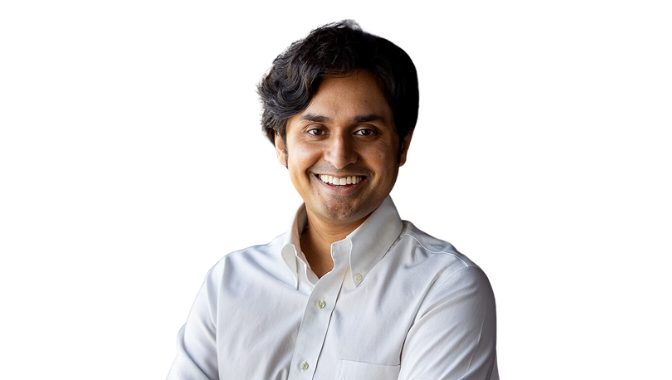

Jay Shetty & & Dr. K ON The Mindset Shift to Finding Direction & Purpose
In this On Purpose episode, Jay Shetty's guest is Dr. K, a psychiatrist, former Harvard Medical School faculty member, and the author of How to Raise a Healthy Gamer. With millions of online subscribers, Dr. K is renowned for his direct and well-researched reflections. He combines clinical psychiatry with traditional spiritual training, offering new paths for people to navigate a rapidly changing world.
In this On Purpose episode, Jay Shetty's guest is Dr. K, a psychiatrist, former Harvard Medical School faculty member, and the author of How to Raise a Healthy Gamer.
With millions of online subscribers, Dr. K is renowned for his direct and well-researched reflections. He combines clinical psychiatry with traditional spiritual training, offering new paths for people to navigate a rapidly changing world.
The Quarter-Life Crisis
Many people in their 20s and 30s feel confused, lonely, and hurt, even when their external world appears stable. Dr. K explained to Jay Shetty that people are becoming more aware and that the facade is starting to crack. Many are experiencing what is called a noiseless crisis – a personal struggle that is invisible to the outside world.
According to a Yale Medicine report, 70% of people in their 20s are experiencing a quarter-life crisis.1 This occurs when people follow the traditional (college, job, family) path but wake up realizing this isn't what they really want from life.
Dr K asserts that our society evolves at a rapid pace, and a standard formula that worked for previous generations is no longer relevant today. Our culture's pace is accelerating, and the institutions and research designed to support mental health can't keep up with the pace. One example is the current economic situation, which drives more and more young people to live with their parents until well into their 30s. This affects their dating life, as well, and contributes to the loneliness epidemic, Dr. K added.
Finding Identity Within
Dr. K explained to Jay Shetty the difference between identification and identity and why it can confuse people. Identification involves looking outside of yourself to find a group you belong to, such as a political party, a subculture, a hobby, etc. However, true identity comes from within, and it reflects your inner world.
When people feel insufficient, it's because they often try to make others happy and fail to meet their external expectations. Dr. K shared with Jay Shetty that our core sense of self is often socialized through external validation. Since it's becoming increasingly difficult to meet societal expectations nowadays, people must look inward and determine their personal reasons for living and the values that guide their life choices.
Thoughts Aren't Facts
To understand your thoughts, it's essential to distinguish between thinking about yourself and paying attention to yourself. When you think about yourself, it's usually in the first person, and you'd start with "I am." It's like looking at your reflection in the mirror, but all you see is the reflection, not the real you.
Paying attention to yourself, on the other hand, means observing, not thinking. Dr. K told Jay Shetty that observing creates distance and perspective; you can recognize that thoughts are not facts, and you don't automatically associate your person with them. He added that observing can deactivate the Default Mode Network (DMN), the part of the brain responsible for self-reflection, and which becomes hyperactive during depression.
The Illusion of Happiness
When we attach implications to events, we get to see things much clearer, Dr. K told Jay Shetty. For example, if you think a promotion will come with certain perks, you are likely to be disappointed if this doesn't come true. However, most people still tend to associate positive and negative implications with an outcome.
Jay Shetty and Dr. K discussed the concept of equanimity (a core concept of the Bhagavad Gita), which is the idea of not being disturbed by happiness or distress. Dr. K defines disturbance as anything that changes the mind and alienates you from your natural state of stillness and peace.
When you chase growth and ambition, your ego feels gratification, and, at the same time, it trains the brain to only feel good when it achieves something. This way, you will find yourself constantly chasing the next accomplishment. This is why Dr. K suggests focusing on who you are becoming and what life you will inherit tomorrow instead of concentrating on what you are doing.
A Series of Terrible Decisions
Dr. K shared with Jay Shetty his personal journey: he failed in college, fell into a gaming addiction, studied for seven years to become a monk, left monkhood for love and medical school, transitioned from holistic oncology to psychiatry, and finally stepped away from an academic career at Harvard Medical School to stream and help gamers online. He calls his path "a series of terrible decisions."
Dr. K admitted he initially pursued monkhood partly driven by his ego, since he wanted to feel superior to the materialistic people he felt had surpassed him. However, his wise guru called him out and made it clear that monkhood was only an escape to Dr. K rather than a conscious choice. He told him to leave and come back when he has a life worth giving up. So, he left monkhood and realized that following his purpose felt more fulfilling.
Healing Through Inner Turmoil
Dr. K told Jay Shetty that constant use of technology dulls and numbs inner discomfort; he shared a study that linked excessive time spent on the toilet with phones to a 65% increased risk of hemorrhoids.2 Phones have become an everyday distraction, which, from a psychological perspective, dulls our sense of selves. Dr. K told Jay Shetty that our internal awareness rusts when our attention is incessantly pulled outwards.
The main reason why people avoid looking within is that it's often painful. When he was younger, Dr. K used to play video games until he'd pass out, before his mind could bring up the shame and guilt he felt over his failures. Just like him, many others suppress painful thoughts and trauma and throw themselves into activities that pull their attention elsewhere.
Dr. K explained to Jay Shetty that, neuroscientifically, utilizing technological devices suppresses emotional circuits;3 yet healing requires reawakening these circuits. Just as vomiting purges food poisoning, allowing negative emotions to surface is the mind's natural, healthy way to seek healing. Dr. K emphasized that discomfort is the prerequisite for breakthroughs.
You Are the Sum of Outside Influences
There is a fine balance between listening to other people's opinions and not caring what they have to say. Dr. K told Jay Shetty that it's essential to understand where to draw the line. In his opinion, you should value what people think, but not allow them to determine your identity. You can accept criticism without allowing it to destroy your sense of self, just as well as you can stop looking for external validation. According to Dr. K, the best solution is to receive feedback but understand that criticism is often projection, not a reflection of who you are at your core.
When it comes to relationships, we are often driven by our egos, which influences our path to fulfillment – getting married, seeking a promotion at work. If this fulfillment is blocked, it often leads to depression and loneliness. Dr. K told Jay Shetty that humans are social creatures and have evolved to care deeply about the tribe's judgment, as ostracization meant death.4
The result is an accumulation of emotional baggage or traumas, which can cause past negative experiences distort our perceptions of new individuals. Dr. K explained to Jay Shetty that people who often suffer relational issues (such as being exploited) send out signals that others can pick up on. He even added that "being yourself is one of the worst things that you can do," because our current identity is often a product of unconscious programming, social conditioning, and trauma. You need to dismantle these established patterns in order to truly grow.
Modern Gender Challenges
Modern society is still based on certain expectations from both men and women. Dr. K told Jay Shetty that modern masculinity is focused on intra-male competition, where they are trying to become alphas. Yet this pursuit of physical strength or achievements based on transactions doesn't necessarily result in happiness or long-term partnerships. Men who approach relationships transactionally only attract women who see them, too. This is where the misconception that women only want money stems from.
According to Dr. K, modern men find themselves in a challenging position, where they are expected to be high earners, yet the ability to meet these expectations has diminished, since over 60% of college attendees are now women.5 When men fail these expectations, they often fall into unhealthy behaviors such as anger, pornography, and gaming, all aiming to alleviate their internal discomfort.
On the other hand, women's primary struggle is safety. Dr. K explained to Jay Shetty that men's struggles often manifest as anger and aggression, which significantly contributes to the increased danger women are facing. Society often neglects men's struggles, assuming they are privileged and that compensates for their challenges. Yet the reality is that, while privilege does exist, it doesn't cancel out hurt or failure.
From Judgment to Compassion
In Dr. K's opinion, society needs to move from judgment to understanding, so that people can get along better. However, it requires significant effort. Dr. K told Jay Shetty that judgment arises from the activation of negative emotions (such as anger, fear, and anxiety), which narrow our peripheral vision from 180 degrees to 30 degrees, both physically and psychologically.6 When this narrowing takes place, people tend to see things as black-and-white threats, and they act out of survival, not from a place of understanding.
Dr. K believes that we must lower these intense emotions in order to overcome judgment. When someone approaches you with hostility, he recommends, instead of becoming defensive yourself, to be compassionate and ask questions to understand where they're coming from. An important thing to keep in mind is that compassion doesn't mean sacrificing boundaries; it means keeping them in place while offering support and alternative solutions.
Combating Meaninglessness and Addiction
To Dr. K, meaninglessness is the root of addictions like pornography. He told Jay Shetty that porn addiction is often not about lust, but about emotional regulation. One of the most powerful biological ways to shut offnegative emotional circuitry is sexual activation; it suppresses anxiety, fear, logic, and risk assessment. However, the negative effects are severe, and they include a concerning rise in erectile dysfunction among men under 30.7
For the listeners struggling with addiction, Dr. K shared three pillars of intervention:
- Structural Changes: Restrict usage and log out of devices to prevent pornography from infecting every part of your life.
- Emotional Regulation: Develop alternative coping skills (like meditation or walking) and create idle time before sleep to process emotions.
- Find Meaning or Purpose: This takes up to 20 weeks, Dr. K found.
Purpose comes from simple, practical behaviors:
- Self-direction: making your own choices, even small ones, to feel in control of your path.
- Stretching your capacity by doing slightly more than you thought you could, which builds confidence and growth.
- Relatedness is the sense of belonging that comes from being truly seen by others.
To Jay Shetty, service and surrender play an equally essential role: service helps reduce ego and improve depression, while surrender is the ability to accept outcomes after doing your best.
More From Jay Shetty
Listen to the entire On Purpose with Jay Shetty podcast episode “Dr. K: Feeling Lost in Your 20s or 30s? (THIS Mindset Shift Will Help You Find Direction & Purpose)” now in the iTunes store or on Spotify. For more inspirational stories and messages like this, check out Jay’s website at jayshetty.me.
1Yale Medicine. 2024. “A Quarter-Life Crisis Is Real — Here’s How It Can Affect Your Health.” Yale Medicine News, February 22, 2024. https://www.yalemedicine.org/news/quarter-life-crisis-health
2Ramprasad C, Wu C, Chang J, Rangan V, Iturrino J, Ballou S, Singh P, Lembo A, Nee J, Pasricha T. Smartphone use on the toilet and the risk of hemorrhoids. PLoS One. 2025 Sep 3;20(9):e0329983. doi: 10.1371/journal.pone.0329983. PMID: 40901789; PMCID: PMC12407481.
3Small GW, Lee J, Kaufman A, Jalil J, Siddarth P, Gaddipati H, Moody TD, Bookheimer SY. Brain health consequences of digital technology use . Dialogues Clin Neurosci. 2020 Jun;22(2):179-187. doi: 10.31887/DCNS.2020.22.2/gsmall. PMID: 32699518; PMCID: PMC7366948.
4Williams, Kipling D., and Lisa Zadro, 'Ostracism: On Being Ignored, Excluded, and Rejected', in Mark R. Leary (ed.), Interpersonal Rejection (New York, 2006; online edn, Oxford Academic, 22 Mar. 2012), https://doi.org/10.1093/acprof:oso/9780195130157.003.0002
5Nietzel, Michael T. “Women Continue To Outpace Men in College Enrollment and Graduation.” Forbes, August 7, 2024. https://www.forbes.com/sites/michaeltnietzel/2024/08/07/women-continue-to-outpace-men-in-college-enrollment-and-graduation/
6McKinsey & Company. Psychological Safety, Emotional Intelligence, and Leadership in a Time of Flux. McKinsey & Company, 2024. https://www.mckinsey.com/~/media/McKinsey/Featured%20Insights/Leadership/Psychological%20safety%20emotional%20intelligence%20and%20leadership%20in%20a%20time%20of%20flux/Psychological-safety-emotional-intelligence-and-leadership-in-a-time-of-flux.pdf
7Jacobs T, Geysemans B, Van Hal G, Glazemakers I, Fog-Poulsen K, Vermandel A, De Wachter S, De Win G. Associations Between Online Pornography Consumption and Sexual Dysfunction in Young Men: Multivariate Analysis Based on an International Web-Based Survey. JMIR Public Health Surveill. 2021 Oct 21;7(10):e32542. doi: 10.2196/32542. PMID: 34534092; PMCID: PMC8569536.
Sign up for the only email that puts purpose at the center of your day.


Looking for greater meaning? This quiz shows you how to live with purpose every day.
Take the Quiz
Dreaming of becoming a life coach? This quiz tells you if a coaching career is right for you.
Take the QuizDreaming of becoming a life coach? This quiz tells you if a coaching career is right for you.
Take the Quiz
Everyone communicates differently. Discover your own personal fight style now.
Take the Quiz
Understanding your role in a relationship is the first step to making things work.
Take the Quiz
