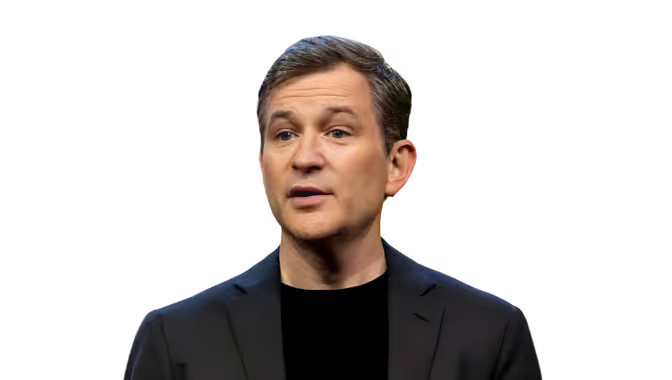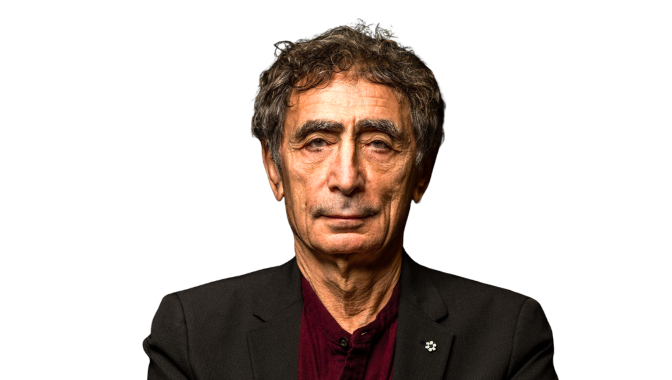

Jay Shetty & Dr. Gabor Maté ON How to Stop Seeking Approval
In this On Purpose episode, Jay Shetty sat down with Dr. Gabor Maté, a world-renowned physician and author, celebrated for his groundbreaking work on the intersections of addiction, trauma, childhood development, and the physiological impacts of stress. He talks about why people seek external validation and how our early childhood adaptations often lead us to sacrifice our authenticity for survival.
Have you ever stopped to wonder if you are truly living your own life, or if you are simply performing a role in a play written by other people’s expectations?
In this On Purpose episode, Jay Shetty sat down with Dr. Gabor Maté, a world-renowned physician and author, celebrated for his groundbreaking work on the intersections of addiction, trauma, childhood development, and the physiological impacts of stress. He talks about why people seek external validation and how our early childhood adaptations often lead us to sacrifice our authenticity for survival.
The Prison of Other People’s Minds
Dr. Gabor Maté explained to Jay Shetty that people care a lot about how others see them, because they spend their entire lives “living in other people’s minds”, as the Catholic monk Thomas Merton put it.1 Dr. Maté explained that we are constantly monitoring whether others judge, love, or hate us, instead of being grounded in our own self-worth.
This human tendency to seek approval stems from our fundamental need to be seen. Dr. Maté told Jay Shetty that a child needs food and physical warmth, but they also need their parents to see their true essence. However, when parents can’t see them for who they are, the child begins to mold themselves into an image they believe to be more acceptable.
Unfortunately, even the most well-intended parents can be limited by their own traumatic past, rendering them unable to see their child’s authentic self. As a result, the child creates an exaggerated or hidden version of themselves just to be noticed in a positive light.
Breaking the Cycle
Dr. Maté told Jay Shetty that, in our culture, parents have preconceived ideas of how their child needs to be to fit into society. When a child fails to meet those expectations, the parents may express their dissatisfaction, which only further suppresses the child’s true nature.
People often believe that love is a mere feeling. However, Dr. Maté added that true love requires the capacity to really see the other person clearly. Unfortunately, parents’ vision is often clouded by their own unhealed trauma, and they continue the cycle of trauma passed down through generations.
To break this cycle, Dr. Gabor Maté recommends moving beyond simply trying to be better parents and, instead, healing their own traumas. He told Jay Shetty that the greatest gift we can give the next generation is the work we do on ourselves to resolve our own internal conflicts.
Understanding Who You Truly Are
For anyone who wants to be the cycle breaker, Dr. Maté recommends asking themselves, “Who am I really?” He told Jay Shetty that a considerable part of what we do and say is often designed to fit other people’s expectations rather than aligning with our inner truth.
When you finally understand who you are and the mask you've worn for a long time, that realization might lead to an identity crisis. Dr. Gabor Maté told Jay Shetty that, even at 81, he is still learning about himself, constantly questioning whose life he is living. According to him, this recognition usually begins when a person realizes that their current way of living doesn’t feel good in the heart or in the gut. Discomfort is the catalyst for curiosity and the eventual return to one’s true self.
Worthy for Simply Existing
Jay Shetty and Dr. Gabor Maté discussed the inner critic that tells us we are valuable only if we are busy or achieving. Dr. Maté explained that we live in a world where we are programmed to equate our value with our productivity and titles rather than our mere existence. Even the most accomplished thinkers, such as Peter Levine, sometimes wonder whether they are enough.
Dr. Gabor Maté asked Jay Shetty and the audience to picture a one-day-old baby and ask if they are enough. He explained that nobody would ever look at a helpless infant and say they aren’t enough because they haven’t done anything yet. Still, we do that to ourselves. Dr. Maté attributes our harsh standards to a deeply ingrained lack of self-compassion in our psychology.
The Guilt of Rest
Some people feel guilty when they take a break or go on vacation. Dr. Gabor Maté shared a personal story from his time as a family doctor with Jay Shetty. He felt terrible for going on a holiday because he feared someone might give birth without him and worried about what might happen without his support.
Dr. Maté now believes it was an absurd way of thinking, because humanity had managed to survive for millions of years before he arrived. However, he told Jay Shetty that the guilt people feel when taking a break stems from the same belief that we are worthless unless we are actively doing something for someone else.
Feeling like we must always provide something for others denotes a diminished sense of self-worth simply for existing. Jay Shetty agrees, noting that even when we understand this intellectually, it remains a challenge to break free from the urge to be constantly busy.
Stress Is Dangerous
Dr. Gabor Maté explained to Jay Shetty that the term “stress” was popularized by the Hungarian-Canadian physician Janos Selye, who demonstrated that chronic stress shrinks the immune system and overworks the adrenal glands.2 While stress response is a necessary survival mechanism for short-term threats, providing adrenaline and cortisol for fight or flight, long-term activation is devastating. The side effects include:
- High blood pressure
- Heart disease
- Strokes
- Osteoporosis
- Autoimmune diseases
- Depression
- Turning on genes that cause cancer
Dr. Gabor Maté warns that many people are literally making themselves sick because they seek to adapt in a culture that values hustle and ignores the body’s limits. He told Jay Shetty that it often takes a major illness to make people understand that their lifestyle is unsustainable and harmful.
If we fail to say “no”, the body will eventually say it for us in the form of illness, Dr. Maté explained. So, he encourages the audience to ask themselves where in their lives they are currently not saying "no," even though they should. He added that this often happens in personal relationships or at work, where the fear of disappointing others or facing negative consequences prevents us from setting boundaries.
The Terrible Twos Are an Essential Developmental Milestone
We naturally learn to say no during the second year of life, now labeled “the terrible twos”. Dr. Maté shared a story with Jay Shetty about a friend’s toddler who was offered an apple. Instead of taking it, he replied, “No, I want an apple.” Dr. Maté explained that the exchange wasn't about the apple; the child was asserting a boundary behind which they can develop their own self.
If a child grows up in a home where “no” is punished or seen as disrespect, they learn to suppress it to maintain the attachment to their parents or caregivers. This turns into an ability to assert our needs and a tendency to disconnect from our gut feeling.
Dr. Maté noted that, before saying “yes” can have any real meaning, we must first learn to say “no”. Yet our modern society often stifles this natural development, and children who weren’t allowed to assert these boundaries become adults who, by age 45, have completely forgotten how to set their own limits.
Adaptations as Survival
Dr. Gabor Maté shared with Jay Shetty the story of an Indigenous woman who felt ashamed of forgetting her native language. She had been beaten in a residential school for speaking it as a child. Dr. Gabor Maté helped her see that forgetting was not a failure of character, but a necessary survival mechanism of her five-year-old self.
Moreover, he cites Elvis Presley as a tragic example of someone who gave up his raw, charismatic energy to become a puppet for his manager, eventually singing lyrics like “I’ll be anything that you want me to be.”
Dr. Gabor Maté told Jay Shetty that we must be compassionate toward our past selves; what we now see as limitations were often the very things that saved us.
Compassionate Inquiry
Dr. Gabor Maté invited members of Jay Shetty’s audience to practice compassionate inquiry, a therapeutic method he developed that relies on patients listening to their gut.3 He asked the participants to notice their physical sensations in their body when they were asking about themselves. He explained that whatever feeling they described was already inside them.
Dr. Maté explained to Jay Shetty that there is nothing wrong with us and that we are not broken. Our current struggles are old adaptations that helped us survive in the past, but that we have outgrown and no longer serve us today. By asking the right questions and extending compassion to ourselves, we allow the inner truth to naturally emerge.
Back to the Roots
For those who want to become a better version of themselves, Dr. Gabor Maté first recommends rephrasing the question. According to him, “improving” implies that there is a version of yourself lacking. Instead, you should ask yourself, “How can I reach my full potential?” This simple rephrasing removes the element of self-judgment.
Dr. Maté encouraged the audience to return to ancient wisdom; he explained to Jay Shetty that modern trauma work is often most effective when combined with Indigenous traditions that emphasize the unity of the heart and nature. Whether through drumming, chanting, or sweat lodges, there is a form of healing that modern civilization has largely lost.
More From Jay Shetty
Listen to the entire On Purpose with Jay Shetty podcast episode “Dr. Gabor Maté: Constantly Worrying What People Think of You? (THIS Simple Shift Will Help You Trust Yourself and Stop Seeking Approval)” now in the iTunes store or on Spotify. For more inspirational stories and messages like this, check out Jay’s website at jayshetty.me.
Disclaimer: The practices described are based on personal experiences and preliminary research. They are not medical advice, nor are results guaranteed. Individual outcomes vary, and some claims are still being studied. Always consult a qualified healthcare professional before beginning any new health, wellness, or therapeutic practice.
1Thomas Merton, The New Man (New York: Farrar, Straus and Giroux, 1961).
2Tan SY, Yip A. Hans Selye (1907-1982): Founder of the stress theory. Singapore Med J. 2018 Apr;59(4):170-171. doi: 10.11622/smedj.2018043. PMID: 29748693; PMCID: PMC5915631.
3Gabor Maté, “Compassionate Inquiry,” Gabor Maté Official Website, 2023, https://drgabormate.com/compassionate-inquiry/.
Sign up for the only email that puts purpose at the center of your day.


Looking for greater meaning? This quiz shows you how to live with purpose every day.
Take the Quiz
Dreaming of becoming a life coach? This quiz tells you if a coaching career is right for you.
Take the QuizDreaming of becoming a life coach? This quiz tells you if a coaching career is right for you.
Take the Quiz
Everyone communicates differently. Discover your own personal fight style now.
Take the Quiz
Understanding your role in a relationship is the first step to making things work.
Take the Quiz