


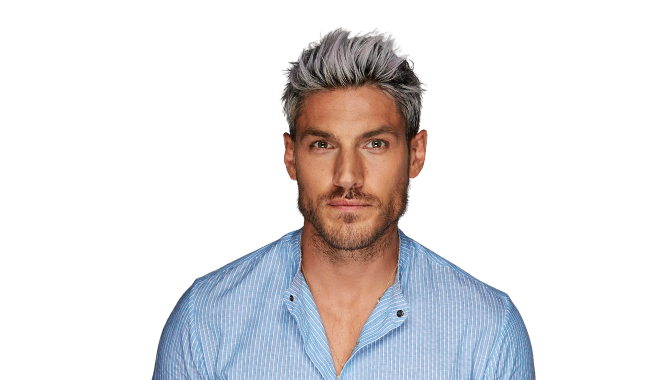

Jay Shetty & Chris Appleton ON Private Struggles Behind Success
In this On Purpose episode, Jay Shetty sat down with Chris Appleton, the renowned celebrity hair stylist responsible for crafting iconic looks for Kim Kardashian, Jennifer Lopez, and Ariana Grande. Beyond his role as the Global Creative Director for Color Wow Hair and his massive social media presence of over 7 million followers, Appleton launched his debut book, Your Roots Don't Define You. He wrote about his personal journey of transformation, identity, and self-worth.
What happens when you stifle your true self for too long?
In this On Purpose episode, Jay Shetty sat down with Chris Appleton, the renowned celebrity hair stylist responsible for crafting iconic looks for Kim Kardashian, Jennifer Lopez, and Ariana Grande. Beyond his role as the Global Creative Director for Color Wow Hair and his massive social media presence of over 7 million followers, Appleton launched his debut book, Your Roots Don't Define You. He wrote about his personal journey of transformation, identity, and self-worth.
Abandoning the Inner Child
Chris Appleton shared with Jay Shetty that his childhood was not filled with the typical joy of a small kid. He recalled a sad memory from when he was about eight or nine years old, when he started to notice that he felt different than his four siblings. While his sisters enjoyed playing with Barbies and his brothers were into sports, he felt stuck somewhere in the middle.
That was the moment when Appleton began to abandon his true self to conform to the persona he believed people around him expected him to be. Looking back on this experience, after going through therapy, he views this memory as a source of motivation, and he understands that he has the power to change who he is and where he comes from.
Hairdressing as a Superpower
Chris Appleton discovered his passion for hairstyling when he was around nine or ten, and it was the first thing he felt good at. Around the same time, he started struggling with dyslexia and was often labelled as stupid in class. Yet when he began working with his hands (trying on his mother's hair), he discovered he had the ability to change how people felt. The hairstylist admitted to Jay Shetty that his power of transformation was mesmerizing, and he saw his talent as a superpower.
But Appleton's passion was not always celebrated; he was often insulted, bullied, and called "gay" in school for his interest in hair. Even before he understood what sexuality meant, he was confronted with homophobic slurs. As a child, these interactions taught him that being gay was bad, and so he tried to distance himself from this identity. He told Jay Shetty he felt pressured to distance himself from his authentic self and come across as more masculine overall.
The Pursuit of Mastery
Appleton told Jay Shetty he wanted so badly to be the best, so nobody would call him bad or different anymore. He landed his first job at a hair salon when he was thirteen - there, he noticed how people's mood improved during the treatment, and that they left with a renewed sense of confidence. It was then that young Appleton decided that was his path.
The hairstylist challenged himself to become the best and master every facet of the industry, from salon work to editorial hair and fashion shows. When he needed to use a technique new to him, he would pay someone at a nearby salon to observe it. Then, he would practice all night on a mannequin head.
Finally Coming Out
When it comes to his personal life, Chris Appleton came out when he was twenty-seven. He had suppressed his true self for so long, and he felt very sad for his eight-year-old self, who had to endure all the shame. The hairstylist told Jay Shetty that suppressing your core identity impacts all areas of your life, such as relationships, friendships, and work. Appleton felt that his life changed when he finally embraced his authenticity.
The process wasn't easy; Chris Appleton explained that it required learning self-compassion and seeking professional help from a therapist. One of the most difficult moments when coming out was the shame the hairstylist felt for his children. He tried his best to be the best father, and dreaded his children having to potentially confront the same shame he did growing up.
Health Fears
Before coming out, Chris Appleton was in a committed, nine-year relationship with the mother of his children, Katie Katon, a relationship he described to Jay Shetty as magical. He genuinely thought he had it figured out, doing all the things he believed a man was supposed to do, including painting the fence.
After holding his breath from age eight to twenty-seven, Appleton couldn't deny his true self anymore. Once he let it come to the surface, he felt able to breathe again, and he enjoyed the feeling. He told Jay Shetty that the realization of being gay brought him both relief and shame, as he understood that his confession would hurt those he loved the most.
The hairstylist grew up during the height of the AIDS crisis, exacerbated by media coverage, like Princess Diana shaking hands with an AIDS patient. He internalized the idea that gay men got AIDS. When he met someone who was HIV positive, he immediately cut off the friendship, despite their relationship never becoming intimate.
The Confession of the Darkest Night
Telling Katon was a difficult process, and Appleton had to respect that she needed to go through her own grief. He loved her and didn't want to be gay or different, like he had been misunderstood as a school kid. But the hardest part was telling his children, because he wanted to protect them from the bullying he had faced.
Chris Appleton told Jay Shetty that the guilt towards his children was eating him alive, and, in a moment of desperation, he believed it was better for his children to have a dead father than a gay one. So, he checked into a hotel at night and ingested painkillers and alcohol. He called his girlfriend to apologize, and woke up in the hospital.
That dark night marked a turning point in the hairstylist's life. He told Jay Shetty he decided he couldn't hate himself anymore, and the only thing he could do was to embrace who he really was. From then on, he allowed himself to be seen, marking the beginning of his recovery.
Grieving the Loss of the Created Self
Chris Appleton chose to open up to Jay Shetty about his painful experience because people's perception of him is often polished and glamorous, unaware of the struggles behind the scenes. Healing didn't happen overnight; he had to face each day as it came. The hairstylist admitted that therapy played a crucial role in his recovery process, enabling him to sit with his feelings and gain a deeper understanding of himself. At the same time, he had to ensure that Katon and his children received the necessary support to navigate this life-altering change, as well.
The hairstylist told Jay Shetty that embracing his new self made him grieve the old self he had created. It was like a resurrection, but he embraced the idea that growth is cyclical and that we keep evolving throughout the entire course of our lives. By sharing his story, Appleton felt more responsible to actually live the lessons he was teaching. He emphasized that, even though he is successful, he still doesn't have it all figured out, but he is grateful for the constant growth and learning opportunities.
The Hollywood Breakthrough
Chris Appleton lived in England until he was thirty-one. During this time, he commuted internationally and worked with traveling artists. He told Jay Shetty that he arrived in LA with just two suitcases and a dream, after receiving an email from JLo's team, which he initially disregarded as a scam.
The hairstylist's first major break was doing Christina Aguilera's hair on The Voice, an opportunity that initially seemed doomed. He was invited in to do the musician's hair, but had only 20 minutes to do so. In that high-pressure moment, Appleton decided to trust his gut feeling and suggest she wear a wig. According to him, it was the best option given the short time he had to finish her hair. Although Aguilera is no fan of wigs, it was an instant hit on live television. This triumph quickly opened doors for him, leading him to work with Ariana Grande, Kim Kardashian, Adele, and Katy Perry.
Alignment, Self-Respect, and the Continual Journey
In recent years, Chris Appleton faced public scrutiny due to his divorce from his former partner, Lukas Gage. He told Jay Shetty that therapy helped him overcome this difficult time when he needed to process his feelings. He added that the biggest lesson learned was the critical importance of alignment and finding the inner peace that matches his external success.
The hairstylist filed for divorce because the relationship was no longer aligned with his truth, and he saw this decision as necessary self-respect. He told Jay Shetty that moving fast in a relationship doesn't mean recklessness; it means hope, and he has no regrets, preferring to love and fall than to never feel anything at all.
Now, Chris Appleton encourages the listeners to stop, reflect, and ask themselves if their current path is what they really want. After looking in the mirror and not recognizing himself for twenty-seven years, he can now declare that his roots don't define him. You can still choose who you want to be, despite your past.
More From Jay Shetty
Listen to the entire On Purpose with Jay Shetty podcast episode “Chris Appleton EXCLUSIVE: “I Thought My Kids Would Be Better Off Without Me” Opening up About The Darkest Night of His Life and What FINALLY Gave Him The Courage to Live Authentically” now in the iTunes store or on Spotify. For more inspirational stories and messages like this, check out Jay’s website at jayshetty.me.
Sign up for the only email that puts purpose at the center of your day.


Looking for greater meaning? This quiz shows you how to live with purpose every day.
Take the Quiz
Dreaming of becoming a life coach? This quiz tells you if a coaching career is right for you.
Take the QuizDreaming of becoming a life coach? This quiz tells you if a coaching career is right for you.
Take the Quiz
Everyone communicates differently. Discover your own personal fight style now.
Take the Quiz
Understanding your role in a relationship is the first step to making things work.
Take the Quiz

