


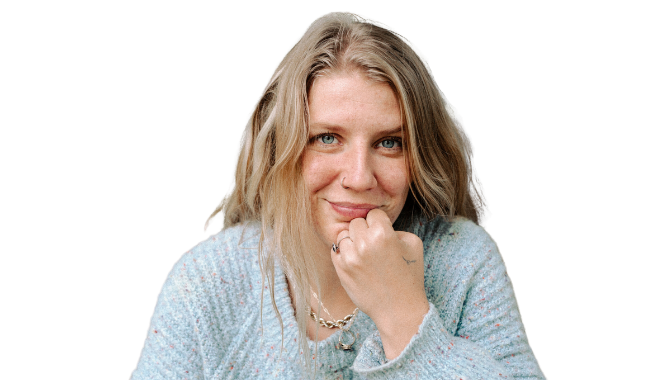

Jay Shetty & Amie McNee ON Unlocking Your Creativity
In this On Purpose episode, Jay Shetty sits down with Amie McNee, author, poet, and self-proclaimed advocate of shame-free art, to explore the emotional and spiritual dimensions of creativity. McNee’s new book, We Need Your Art, instigates discussions around vulnerability, imposter syndrome, perfectionism, and how to navigate a career in the arts with both heart and strategy.
What would you create if you stopped worrying about what others might think?
In this On Purpose episode, Jay Shetty sits down with Amie McNee, author, poet, and self-proclaimed advocate of shame-free art, to explore the emotional and spiritual dimensions of creativity. McNee’s new book, We Need Your Art, instigates discussions around vulnerability, imposter syndrome, perfectionism, and how to navigate a career in the arts with both heart and strategy.
Everyone is an Artist
A key barrier to artistic fulfillment is the narrow definition of art itself. McNee worries that when she asserts, "We need your art," many listeners immediately assume the message isn't for them, believing they are neither artistic nor creative. She told Jay Shetty that we, as a society, need to broaden our definition of art and look beyond the standard fine art and photography categories. To her, creativity is an innate human drive and desire to make things.
McNee explained that art comes in many shapes, some of which may be unexpected: it can manifest as podcasting or writing, watercolor, photography, makeup tutorials, or book reviews. It can also reflect in our cooking and the way we dress. She told Jay Shetty that we continuously create art, even without realizing it.
Growing up, Jay Shetty also believed that art was his worst subject because he wasn't good at drawing. However, his secondary school art teacher helped him see that art is more than just drawing well; it was about colors, juxtaposition, meaning, collage, imagery, etc. She managed to turn art from fear into his favorite subject.
The Cost of Stifled Art
McNee personally experienced the pain of stifling her creative expression because of others' expectations, which led to immense internal suffering. She had always had a vivid imagination and wanted to express herself through storytelling. However, as she approached adulthood, her creativity was labeled as childlike, irresponsible, or foolish.
Amie McNee admitted to experiencing an internal war, torn between her strong desire to create and the pressure to conform to societal expectations. She resorted to journaling, laying her thoughts and feelings on paper. Through this practice, she let go of her anger, the shame, and the internal violence. Only then could she start rephrasing it all in her head and change the narrative around her creative drive.
McNee is now an advocate of shame-free art, where you embrace your creativity, without letting thoughts of not being good enough or not making enough money keep you from doing what you love.
You Are Always On the Path
While reframing her mindset around her own creativity (mothering herself, as she called it), McNee kept reminding herself that she was on the path. Instead of assuming that she already had everything figured out, she acknowledged that she was still on a journey.
McNee refuses to see success as the result of her work alone, but rather as a combination of actions that led to the result itself. She owes everything to the version of herself that navigated silence, rejection, and who had a lot of shame. McNee encourages artists to understand that their future successful selves will owe everything to the current version of themselves for having the courage to create, to be brave, and to take up space even when no one else is witnessing it.
The Fear of Being Misunderstood
McNee explained to Jay Shetty that shame and misunderstanding are what keep most people from achieving their creative dreams. Yet art is vulnerable; it involves pouring pieces of yourself into an external creation and then offering it to the world.
The first step in overcoming this fear is to accept misunderstanding; you must understand that others will judge you no matter what, but even so, your art is still worth making. Then, ensure that you share your art in what you see as a safe space. For instance, McNee blocked all her acquaintances before sharing her words on Instagram. She created a cocoon that allowed her to evolve into the artist she is today.
It's painful to realize that, sometimes, your loved ones may not believe in your art. Yet McNee told Jay Shetty that artists trigger a lot of people and activate the repressed artist within them. She emphasized that you don't need others' permission to create; the only one to allow it is yourself.
Art for Self Versus the Need to Be Seen
McNee addressed the duality between creating for your soul and the need to share your work with the world. While art comes from within, the author explained that it's an inherent human desire to connect with others and be seen.
Yet many artists feel ashamed for putting their work out there and seeking connection through their work. McNee wants them to know that it's natural and normal, almost holy in her eyes. Jay Shetty admitted that he also felt ashamed of his desire to be seen. Yet, as an artist, you must embrace the duality of creating art for others to see, but also making something that feels good to you.
Baby Steps Against Procrastination
It is not easy to balance work with creativity. McNee opened up to Jay Shetty about the frustration she felt when she wasn't able to create as planned at the end of an exhausting working day. She felt like work robbed her so much of her creative time.
Then, she found that planning to do something big after a day of work will almost always backfire.
So, she started breaking her creative work into smaller, manageable chunks. McNee could easily keep the promise of writing only 300 to 500 words a day, instead of a big chunk. This is something that she can do in 15-20 minutes. She allows her thoughts to flow, yet she also sets a maximum to contain her energy. Over time, these small daily efforts compound, accumulating wins and building a portfolio.
Shitty Art and Playfulness
McNee noted that procrastination and perfectionism are closely related, with perfectionism often causing procrastination. She told Jay Shetty that "shitty art" is an essential part of creation; according to her, if an artist is unable to show a recent pile of messy, shitty art, they are likely not putting in enough effort.
Amie McNee also believes that perfectionism can encourage rigidity and hinder one's creative career. In her opinion, the best art is created when you let yourself go wild - the seeds of great ideas often come from messiness and playfulness, not from trying to create something profound.
Children often let their minds create without any boundaries or inhibitions. Yet, as we grow up, we tend to contain our imagination and care more about what others believe about our ideas, approaches, and creative drive. For example, Jay Shetty illustrates the 30-circles exercise he uses when coaching executives, where he asks them to uniquely complete it in 30 seconds. The adults’ results often follow a logical structure, whereas children doing the same exercise come up with unusual approaches, such as turning all circles into bubble wrap.
Marketing as an Art Form
McNee believes that marketing is also a form of art, and that selling yourself should not necessarily follow strict rules, but also allow room for playfulness and chaos. She explained to Jay Shetty that audiences seek connection with a real human and will forgive an imperfect presentation. You don't need to have the perfect brand color palette in place before selling yourself.
Many creatives experience fatigue when they have to present themselves online in predefined, expected ways. Yet McNee encourages them to rebel and break the rules. Given that artists are naturally rebels for creating in a society that wants them to remain compliant and silent, they should extend that rebellion to how they show their art. Do what feels good for you, McNee and Jay Shetty say.
The Middle-Class Artist
McNee discussed with Jay Shetty the polarized view of today's society regarding artists - you either make it big and become famous or starve. There appears to be no middle ground that is accepted. So, she proposes the concept of the middle-class artist, someone not famous, but who has achieved financial security, stability, and thrives in their work.
Art is profoundly valuable, McNee explained. It isn't frivolous or mere decoration, but it brings about political, personal, and biological change. She advocates for fair payment for artists - people fail to see the time invested in honing the craft, and the energy it took to create an art piece. Many ask for low prices or an artistic gift just because the process was enjoyable or viewed as easy.
Amie McNee argues this narrative perpetuates scarcity. She told Jay Shetty that selling art is a profoundly generous act, necessary to sustain artists and ensure they can create more. She finds it peculiar that nobody bats an eye when an accountant charges for their work, but when an artist does, very few are willing to pay for it.
Oversaturation?
When asked about oversaturation in the creative market, McNee dismissed it as a perfect excuse for playing small. She told Jay Shetty that there may be 2 million podcasts in the world, but there are over 7 billion people. Art is not a toaster that only needs one, she added. People are hungry for books, films, and any kind of creative expression. So, she encourages any aspiring artist to be bold and create, because "there's no noise like your noise."
Amie McNee believes that comparison can be a good motivator, or it can discourage you. If it stems from jealousy and envy, it becomes toxic. However, if you use comparison constructively, it can be highly inspiring, as it can guide you along your path and help you learn from others along the way. Similar to imposter syndrome, envy is an opportunity to level up and learn from a new, uncomfortable, but higher level.
McNee told Jay Shetty that she wrote We Need Your Art from the trenches, while still navigating rejection, silence, and imposter syndrome, and she looks forward to being a companion to others on this challenging yet privileged creative journey.
More From Jay Shetty
Listen to the entire On Purpose with Jay Shetty podcast episode “Stuck in a Creative BLOCK? THIS 3-Minute Practice Will Unlock Your Creativity (This Quick Daily Act Will Help You Feel Inspired Again!) With Amie McNee” now in the iTunes store or on Spotify. For more inspirational stories and messages like this, check out Jay’s website at jayshetty.me.
Sign up for the only email that puts purpose at the center of your day.


Looking for greater meaning? This quiz shows you how to live with purpose every day.
Take the Quiz
Dreaming of becoming a life coach? This quiz tells you if a coaching career is right for you.
Take the QuizDreaming of becoming a life coach? This quiz tells you if a coaching career is right for you.
Take the Quiz
Everyone communicates differently. Discover your own personal fight style now.
Take the Quiz
Understanding your role in a relationship is the first step to making things work.
Take the Quiz

